
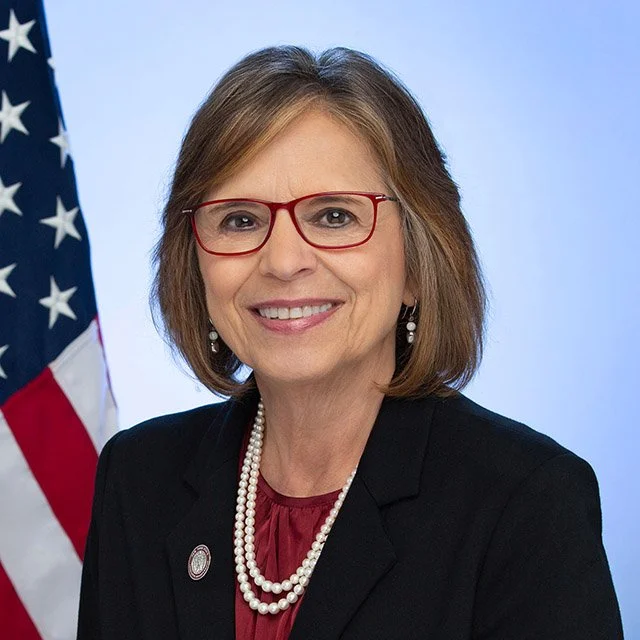
By NYS Assemblywoman Donna Lupardo
I’ll be retiring at the end of the year after serving 22 years in the State Assembly, representing the 123rd District, in the Binghamton area. For the last eight years I have been honored to Chair the Committee on Agriculture, alongside Ranking Minority Member Chris Tague. In the NYS Senate I worked closely with Sen. Michelle Hinchey, Chair of the Senate Agriculture Committee and Ranking Minority Member Sen. George Borello. Over the years we worked together across party lines to support and promote NY agriculture.
A highlight of this year’s enacted budget was the inclusion of $30M for tariff relief payments to specialty crop growers, livestock producers, and dairy farmers to help offset rising costs caused by tariffs. Under this initiative, payments will be limited to a minimum of $1,000 and maximum of $25K.
We also included a bill that I sponsored with Senator Hinchey to increase the tax credit for donations to food pantries made by farmers to 50% of the fair market value (up from 25%). It also increases the amount that can be donated from $5,000 to $10,000.
An extension of the 20% Refundable Investment Tax Credit until January 1, 2033 was also included. The credit is available for eligible farmers who earn more than two-thirds of their income from farming, and applies to investments in buildings, machines and equipment.
An additional $5M was added to the NYS Dairy Farm Modernization Grant Program for a total of $15M. The funding for Pro Dairy was also increased to $1.46M and the authority to administer dairy promotion orders was transferred back to the Department of Agriculture and Markets.
Cornell’s College of Agriculture and Life Sciences (CALS) has been under immense financial pressure following drastic federal funding cuts. As a result, many critical programs have been affected including their dairy, specialty crop, and forestry research farms. The state budget restored or increased many vital programs including the research farms which received $3.41M in additional operating aid along with $2.5M in capital funds. Additionally, $1.4M was allotted for FarmNet, a Cornell-run program that provides critical mental health support and financial counseling for farmers.
It’s important to note that the Environmental Protection Fund (EPF) contained many important investments such as: $27M for Farmland Protection, $20.5M for Climate Resilient Farms to promote soil health and climate resiliency, $18.7M for agricultural non-point source pollution controls and $19M for Soil & Water Conservation Districts.
Throughout my tenure as the Agriculture Committee Chair I have been mindful of what our farmers and producers have been up against. I’ve tried my best to assist where possible, while also blocking efforts that would have been harmful. Please know that as a result of years of education and advocacy on the part of NEAFA and other groups, my colleagues in state government have a greater appreciation for NY’s farm economy and stand ready to assist.