November 4, 2026
By Heather Shouldice
Election Results Remain Preliminary
As of the date of this memorandum, approximately 99% of Vermont precincts have reported results in statewide races. Election returns remain unofficial pending completion of the canvassing process by the Vermont Secretary of State. Certain legislative races may also be subject to recounts or post-election review. All information contained in this memorandum should therefore be considered preliminary and subject to certification.
Executive Summary
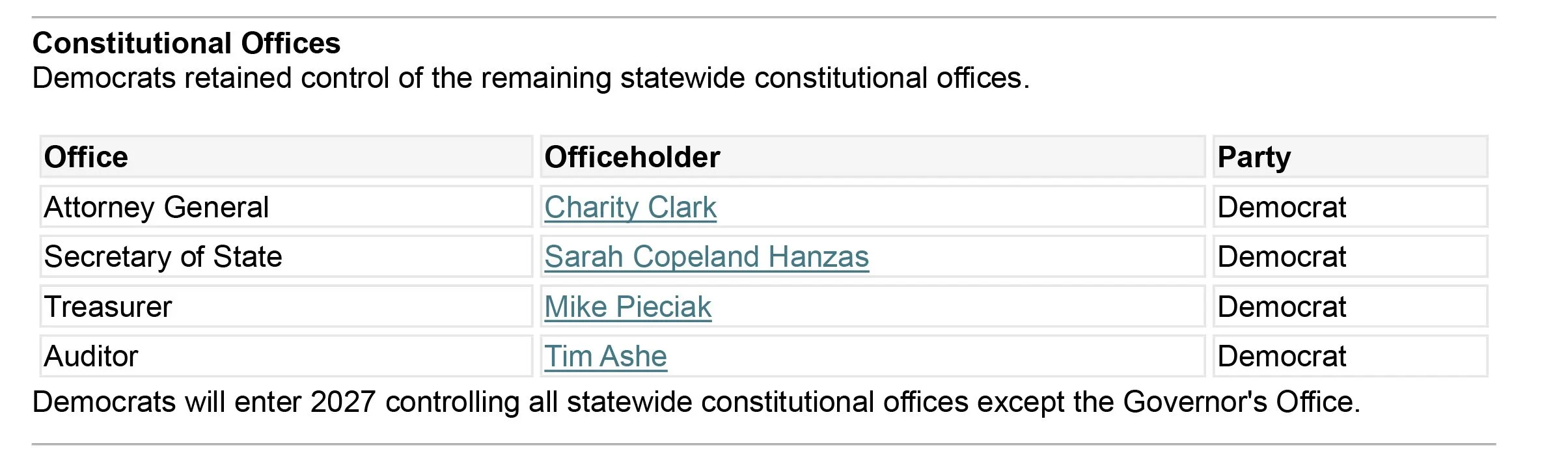
The 2026 General Election resulted in a governing structure that has become increasingly familiar in Vermont politics: voters reelected Phil Scott to a historic sixth term as Governor while simultaneously strengthening Democratic control of the General Assembly, returning the Lieutenant Governor's Office to Democratic control, and maintaining Democratic control of the remaining constitutional offices.
The election positions Vermont for a potentially active 2027 legislative session focused on housing affordability, education finance, workforce shortages, healthcare access, climate and energy policy, employer/employee mandates and economic competitiveness. While Democratic lawmakers enter the biennium with renewed momentum, Governor Phil Scott remains a significant moderating influence on taxation, spending, and regulatory policy.
Analysis
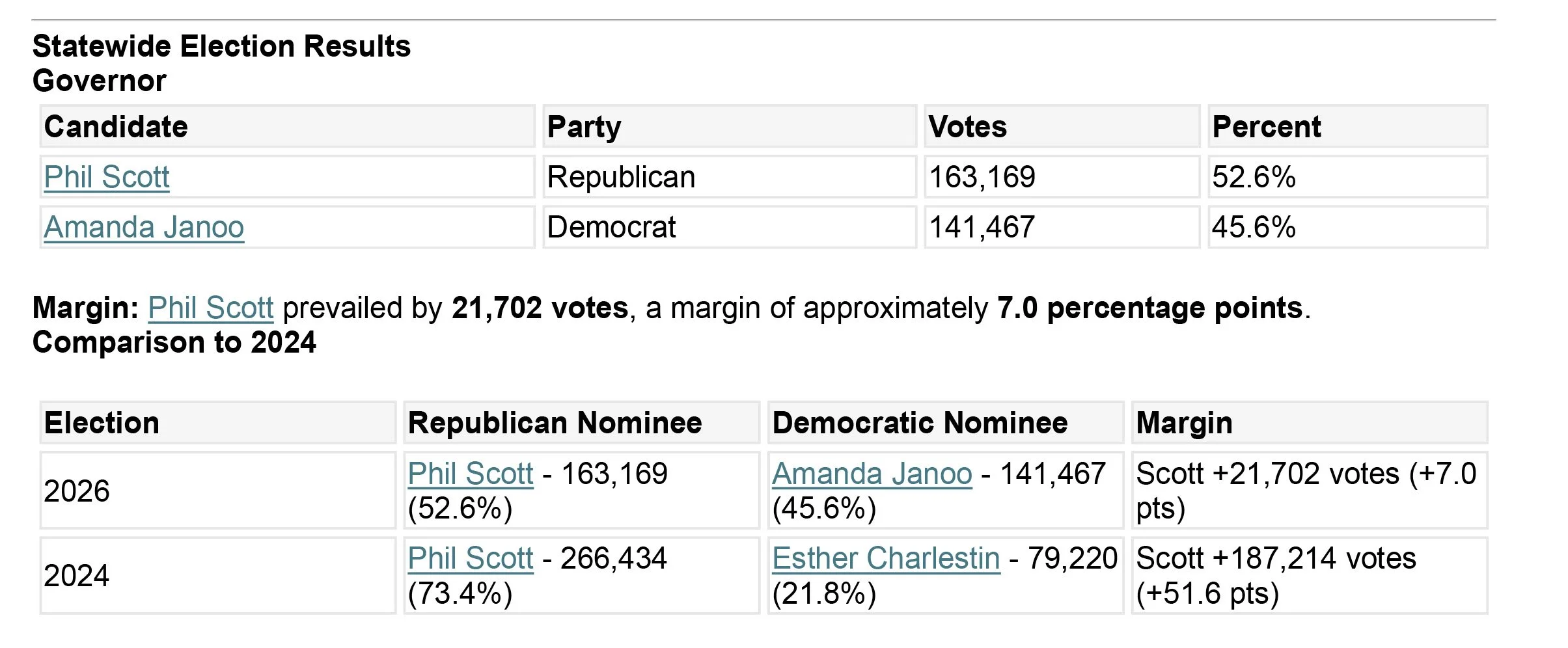
Governor Phil Scott remains Vermont's strongest statewide political figure and continues to demonstrate broad cross-party appeal. However, the substantially narrower margin compared with 2024 reflects a more competitive statewide environment and stronger Democratic performance across multiple races.

Margin: Molly Gray prevailed by 78,128 votes, a margin of approximately 25.6 percentage points.
Analysis
Democrat Molly Gray defeated incumbent Republican John Rodgers, returning the office to Democratic control. Rodgers conceded on election night; the vote totals above are unofficial and subject to certification. The Lieutenant Governor serves as President of the Senate and plays an important role in legislative operations, appointments, and policy leadership. Molly Gray's election further aligns statewide leadership with strengthened Democratic majorities in both chambers of the Legislature.
Ballot Proposals 3 and 4
Vermonters decisively approved both legislatively referred constitutional amendments, according to unofficial results. Proposal 3 (Right to Collective Bargaining) was leading about 74% to 26% and establishes a constitutional right for employees to organize and bargain collectively. It also bars laws that interfere with that right, which effectively prohibits future "right-to-work" legislation. Proposal 4 (Equal Protection) was leading about 79% to 21% and guarantees equal treatment under the law regardless of race, ethnicity, sex, religion, disability, sexual orientation, gender identity, gender expression, or national origin.
Why it matters: Because these are constitutional amendments, future legislatures cannot roll them back through ordinary legislation. Prop 3 settles the right-to-work question in Vermont and is likely to shape employer-facing labor and workplace legislation in 2027. Vote totals reflect roughly 712 of 1,000 precincts (about 224,000 votes) and remain unofficial.
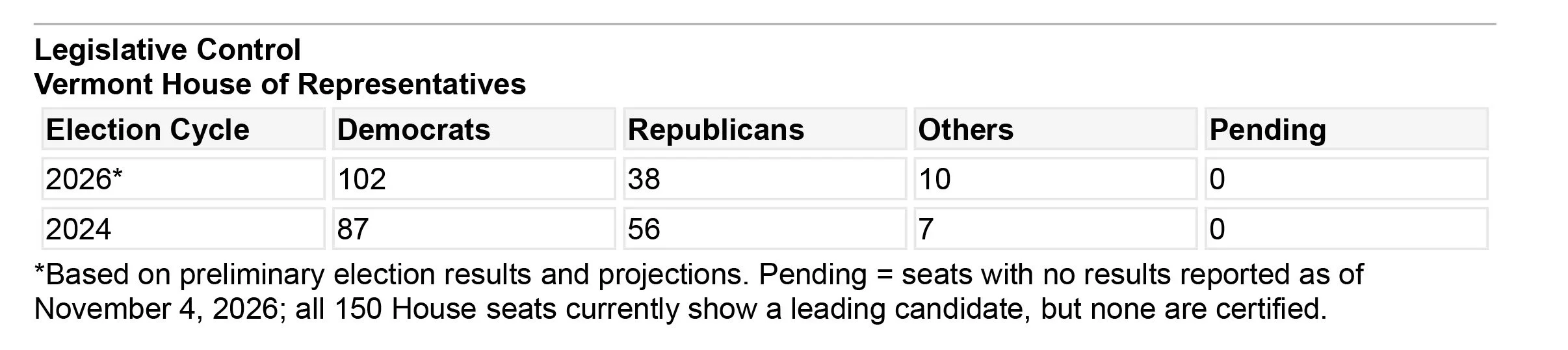
Net Change Since 2024
Democrats: +15 seats
Republicans: −18 seats
Others: +3 seats
Notable Changes (Unofficial Results)
Rutland-Windsor: Phoebe Tucker (D) ousted Rep. Kevin Winter (R-Ludlow), who first won the seat in 2024.
Rutland-9: Jeff Haylon (D) defeated Aida Nielsen (R) for the open seat left by Rep. Todd Nielsen (R-Brandon).
Addison-Rutland: Jonathan Hescock (D) defeated Rep. Jim Casey (R), 57.1% to 42.9%.
Bennington-Rutland: Mike Rice (D) defeated Rep. Sandy Pinsonault (R), 53.3% to 46.7%.
Addison-3: John Stroup and Ariel Bolles (both D) won the two seats; Rep. Rob North (R) lost.
Caledonia-3: A seat held by Rep. Beth Quimby (R) flipped to Democrats.

Net Change Since 2024
Democrats: +4 seats
Republicans: −7 seats
Others: no change
Notable Changes (Unofficial Results)
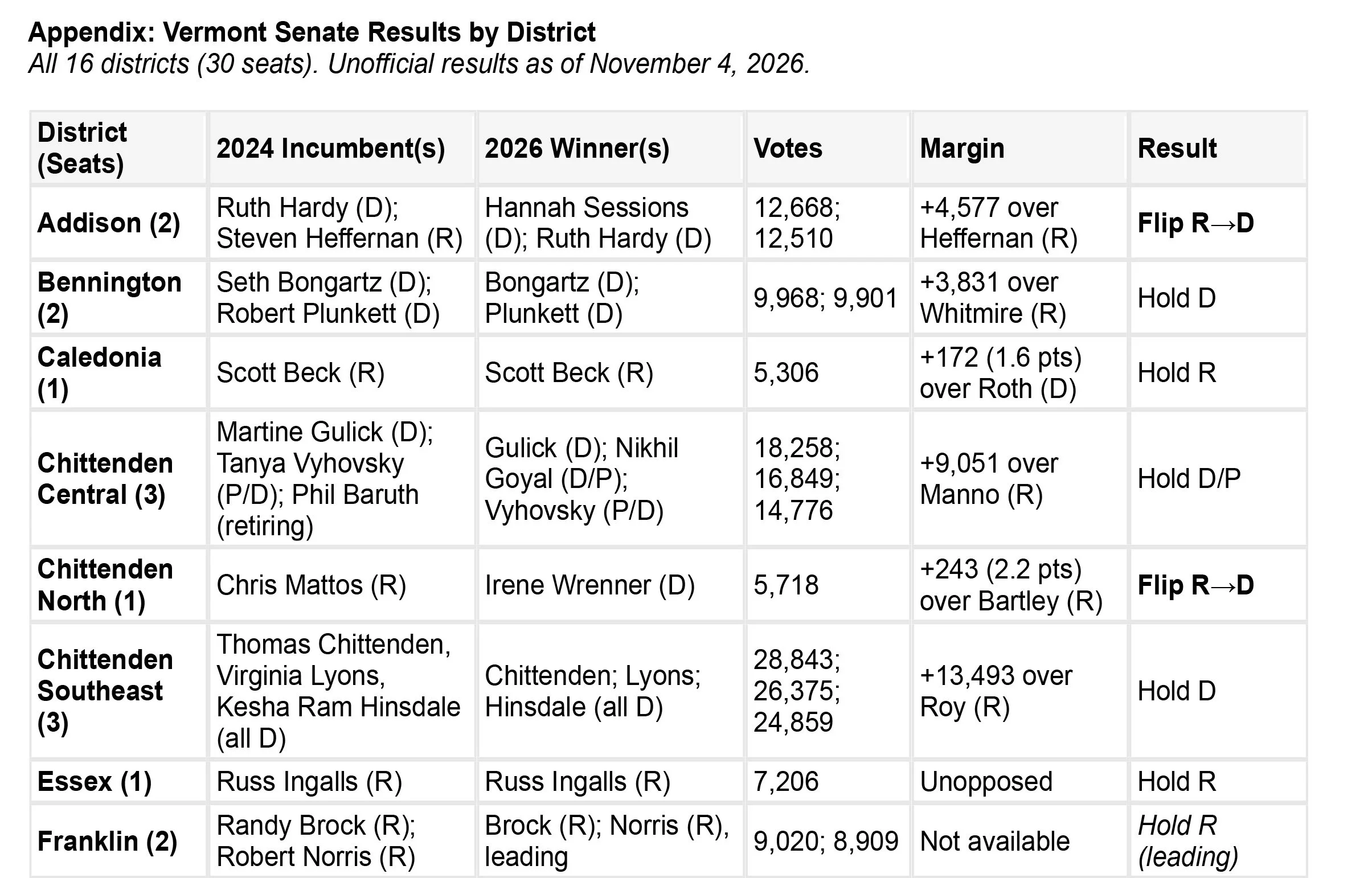
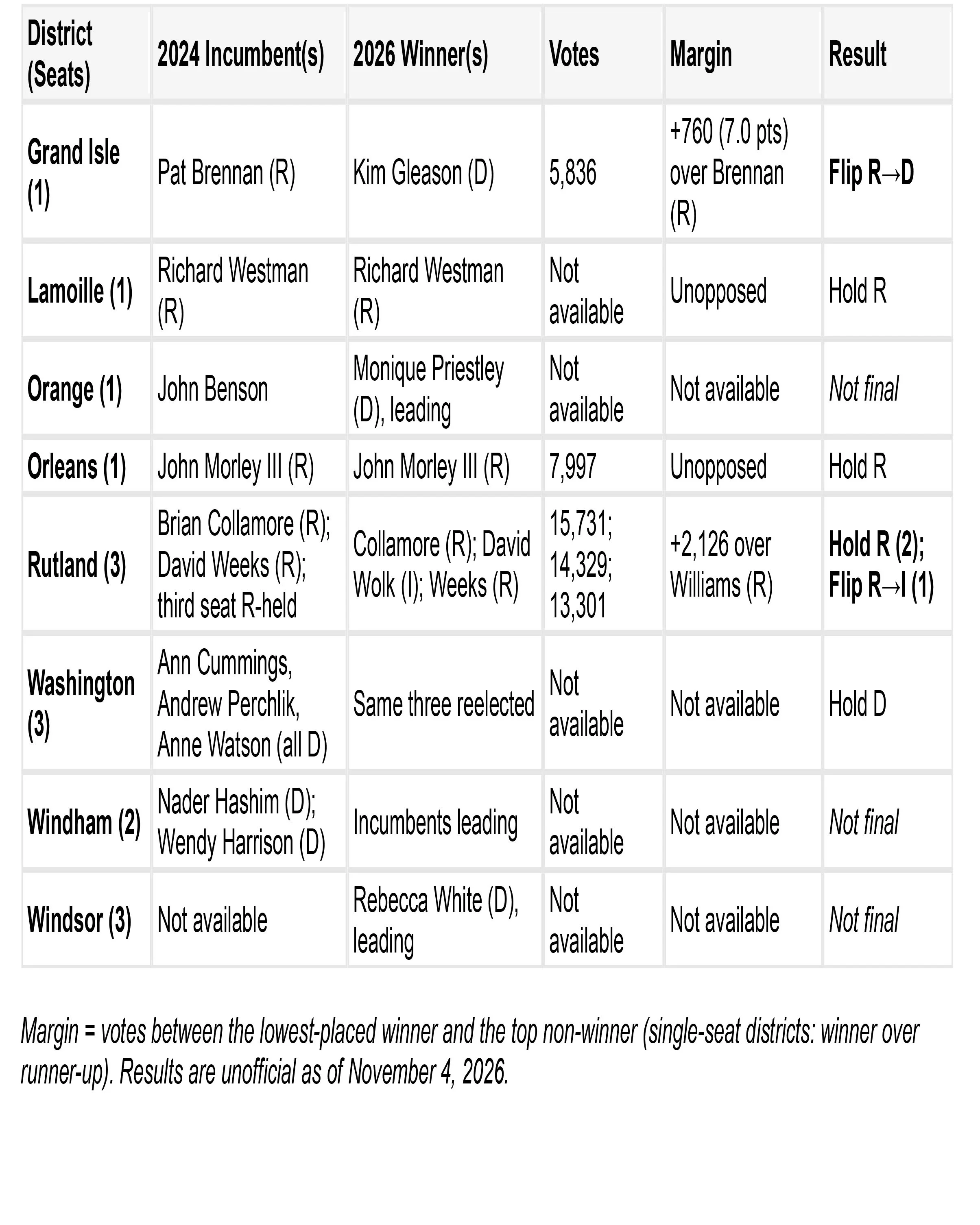
Grand Isle: Kim Gleason (D) defeated Sen. Pat Brennan (R), 53.5% to 46.5%.
Addison: Hannah Sessions (D) won a seat alongside incumbent Sen. Ruth Hardy (D); Sen. Steven Heffernan (R) lost.
Chittenden-North: Irene Wrenner (D) defeated Ashley Bartley (R), 51.1% to 48.9%, flipping a seat held by Sen. Chris Mattos (R).
Rutland: David Wolk (I) won a seat, edging Terry Williams (R); Sens. Brian Collamore and David Weeks (both R) were reelected.
National and State Political Context
The 2026 election was shaped by many of the issues driving elections nationwide, including housing affordability, healthcare access, workforce shortages, inflationary pressures, and concerns regarding economic stability.
Vermont voters again demonstrated a willingness to distinguish between national political trends and state-level governance. While Democrats expanded their influence throughout state government, voters simultaneously returned Governor Phil Scott to office, reinforcing Vermont's longstanding preference for pragmatic, divided government.
Implications for 2027
Although Democrats strengthened their control of state government, Governor Phil Scott remains a significant counterbalance and continues to enjoy broad public support.
Legislative proposals involving:
Tax increases
New fees or assessments
Utility rate impacts
Expanded employer mandates
Significant regulatory requirements
Will likely face heightened scrutiny from the Administration and could become focal points for negotiation during the 2027 session.
Key Takeaways
Governor Scott Remains a Dominant Political Force
Despite a narrower margin than in 2024, Phil Scott secured a sixth term and remains the principal moderating influence on major policy decisions.
Democrats Strengthened Their Position Statewide
Democrats regained the Lieutenant Governor's Office, expanded legislative majorities, and maintained control of all other constitutional offices.
Legislative Activity Is Expected to Increase
Housing, education finance, workforce shortages, healthcare access, affordability, and energy policy are likely to dominate the 2027 policy agenda.
Conclusion
The 2026 election strengthened Democratic influence throughout Vermont government while preserving Republican control of the Governor's Office. Democrats enter the 2027 biennium with expanded legislative majorities, renewed statewide momentum, and control of every constitutional office except Governor. Governor Phil Scott remains the state's most influential political figure and will continue to play a central role in shaping legislative outcomes.
For Vermont's business community, professional associations, healthcare providers, municipalities, energy stakeholders, and nonprofit organizations, the 2027 legislative session is expected to present significant activity across a broad range of policy areas, with final outcomes likely determined through negotiation between legislative leadership and the Governor's Office.
** Based on publicly reported election results available as of November 4, 2026. Final certified results, recounts, and election challenges may affect individual race outcomes and legislative seat counts. The Super-majority in the Vermont House & Senate will remain.