The Feed Industry, Dairy Farms, and Environmental Stewardship

By Eric Jenks

Graphic courtesy of Dr. Kristan Reed.

Graphic courtesy of Dr. Kristan Reed.

For over 20 years, the feed and dairy industries have been making headway on reducing their environmental impact through the reduction of phosphorus in the feed used for dairy cattle. “It was the late 1990’s when people started talking about phosphorus in feed,” said Dr. Larry Chase, professor emeritus from Cornell University’s Department of Animal Science. “Dr. Larry Satter from the University of Wisconsin and the Dairy Forage Research Center which is a USDA facility, it was his group that were really getting concerned about the environmental impacts of phosphorus in feed. Research was showing that we could lower phosphorus levels (which is the most expensive mineral in feed), decrease excretion and keep dairy performance high.”

The northeastern feed industry reacted swiftly to the news about phosphorus ratios. “When his (Satter) work came out, we started taking a look at feed rations and where we were at in the Northeast,” said Chase. “And we started to look at ways that we could reduce it. We did a small trial at Cornell to verify the Wisconsin results, and around 2001 the National Research Council put out the revised dairy nutrition numbers where they implemented a lower phosphorus requirement. That same year we challenged the feed industry to adopt the new recommendations, and within a year they made that adjustment. The feed industry really stepped up and implemented it very quickly. They should get the credit for making this phosphorus change happen in NY, and the dairymen should get credit for feeding the rations designed by the industry person.”

In the past 20 years, a lot has changed in New York’s dairy industry. According to the recent white paper released by Chase and Dr. Kristan Reed, Assistant Professor at Cornell University’s Department of Animal Science and the Northeast Agribusiness and Feed Alliance Partners Sesquicentennial Fellow in Dairy Cattle Biology, the number of dairy cows in the state has decreased by 10.5%, production per cow has increased 40.4%, the ration of phosphorus is down by 18.8% and farm balances of phosphorus has decreased by 51%. According to Chase the increase in production is not linked to the change in phosphorus. “Milk production in the US over the last 40-60 years, there’s been an increase every year. It’s due to genetics, herd management, and better feed and nutrition.” To read the paper, part of Cornell’s Animal Science Publication Series (No. 253), click here.

Tackling environmental challenges on the farm and in the feed industry doesn’t stop at phosphorus. “Our dairymen are very progressive towards being environmentally friendly,” said Chase. “The pressure will continue to make as close to a closed loop system as we can, and the more that we can share the progressive and responsible actions that are taken, that’s a win for the industry, society, and environment.”

Reed’s current work builds off of all of the environmental and nutritional work that has taken place in the last several decades, so that the industry can focus on whole farm management instead of just one or two individual areas. “The focus now is looking at farms from a systems perspective, to not focus solely on the animal or the field or one practice here, or a nutrient at a time, but to understand how all those pieces fit together,” said Reed. “If you put together all of these systems under certain weather patterns, what are the impacts going to be on the production for high quality food products and the environment. You have to look at water use, greenhouse gas emissions, and water quality. So one place to start is with a program like Larry’s for feed management, you setup a program to ensure that the cattle’s diets are in line with the recommendations and that they’re not over feeding, especially nitrogen and phosphorus. Then you could look at whole farm nutrient mass balance and manure management, to see if there are opportunities to improve storage system at optimal times, etc. The point of why we need a systems model is that there’s no one management recommendation that fixes everything. It’s all very farm and environment specific as to what the best decisions are from an environmental, herd health, and profitability standpoint.

“Usually when we talk with dairymen about this, we indicate that this is an opportunity to improve profitability by being better managers of resources,” said Chase. “We can maintain or increase milk production, lower feed cost, lower excretion in the environment (which is a benefit to the society on a whole) and make better use of feed nutrients, while also reducing environmental impacts and overall costs, that get’s their attention.”

Dairy Cattle Genetic Sales Suffer from Covid-19 Restrictions

Cattle at Liddleholme Farm in Argyle, NY. The call for show cattle has been reduced this year due to Covid-19 and the closure of shows and fairs across the country. Photo by Eric Jenks

Cattle at Liddleholme Farm in Argyle, NY. The call for show cattle has been reduced this year due to Covid-19 and the closure of shows and fairs across the country. Photo by Eric Jenks

By Eric Jenks

Many industries have suffered losses during the Covid-19 pandemic due to the restrictions on social gatherings. Among them are those that specialize in genetic work for the dairy industry. The market for show cows over the last 4 months, its changed greatly,” said Alicia Lamb of Lamb Farms and their subsidiary, Oakfield Corners Dairy in Oakfield, NY. “The market for our show cattle is gone. I can’t say it’s 100% completely gone, but the value has declined significantly. We had planned to have a sale in the spring of about 60-70 head, and we were unable to have that sale because of the pandemic. We have about 100 extra head than we had intended at this time of the year and have been unable to sell at the value that we had planned to back in March. We’re getting offers that are less than half of what we typically get for our registered Holsteins.

The cancellation of shows and fairs has also led Lamb Farms to focus on different markets for their work. “There are two segments of genetics we focus on with registered Holsteins. Show cattle are straight forward, it’s based on their type and appearance. Our second segment is index cattle, which is high end commercial cattle. You’re looking to create the genetics for the next bull that goes into stud that makes the next greatest cow for production needs. Production traits are valued higher than physical confirmation in this field. The index market has remained relatively stable thankfully. One thing to remember about all of these shows and fairs that have been canceled - there a lot of related industries, side industries that are associated with them that are impacted by it too. Magazines that are dedicated to it, those guys are suffering because of advertisements being down. There are people that specifically board show cattle and they’re concerned because of no-shows since the events are cancelled. There are fitters that go from show to show to show, and those guys are out of business. And since there are no shows to compete in, you don’t know how to place your cattle against competition and whether it’s worth flushing that cattle for future IVF use. There’s just this compounding effect that people don’t really think about. It’s unfortunate. Moving forward as things do reopen a bit for our show cattle, it’s been important that they’ve been kept in shape to show the best that they can. There’s one show we’re looking forward to in Western NY in October, another in New England, to at least get the cows out to.

Others, like Liddleholme Farm in Argyle, NY have also seen changes to the market. “It’s been an adjustment,” said Adam Liddle of Liddleholme Farm in Argyle, NY. “The cancellation of the spring sales was a setback for sure. There’s been a few good online sales that we were able to consign to, and while we didn’t get 100% of the value that we would have gotten for a regular sale, we still did well and got our animals to market. In person is always better. People that spend $8-25k on cattle, they like to see them in person, see them walk, etc. And those sales were cancelled. You can see them online but it’s not quite like in person - it’s just different. With the live shows, when you go to that stuff there’s a lot more to them because the people there are your friends and peers and having to do everything online loses some of that camaraderie.

Liddleholme also feels for the effect that these cancellations have had on youth that raise for 4-H and FFA projects. “The fairs are where you compete against the other best animals to measure up against, to see how you’re doing and what you need to improve on,” said Liddle. “At the county fair level, we sell and lease animals. When we lease an animal to a youth, there’s no money involved. It’s likely that these kids aren’t from farms or have owned an animal before. We usually have 8 to 10 kids that lease and show at Washington County’s fair. Most kids like being around animals, and it’s a great way to get the next generation interested in farming. It’s a little disappointing for them, and usually a great summer project for them to work on.”

While there are concerns with a second wave in the country, and what that might impact, Liddle does his best to look at the long-term goals of his farm. “With everything in life, when there are challenges, there are changes,” said Liddle. You just have to change with it and go on. Farming is always changing. This is just a short-term thing and we’ll get through it.”

Notice of Bylaws Amendments

The NEAFA Board of Directors, at their June 25, 2020 meeting approved the following bylaws amendments:

ARTICLE II

MEMBERSHIP

Section 1. Classification: The membership of the association shall be divided into four (4) classes as outlined below. All members of each class shall be in good standing and subject to the By-Laws

of this association and shall pay dues according to a schedule established annually by the Board of Directors. The Board of Directors may approve or disapprove any membership.

(a) Regular Members: Any person, partnership, firm or organization engaged in the business of distribution, or manufacture of, feed, feed ingredients, grain, machinery, seed, fertilizer, agricultural chemicals, agribusiness supplies or services, and animal health products, professional agribusiness services, and retail agribusinesses, shall be eligible for membership in the association.

(b) Academic/ Research Member: An individual whose professional responsibilities in academics, research and/or education necessitates the direct engagement with the agriculture industry

(c) Affiliate Members: Any person serving as an academic, researcher, educator, farmer, or public servant or otherwise interested in agriculture, is eligible for affiliate membership

(d) Honorary Members: (There is no change to this language)

Section 2. Voting Rights:  Only regular and academic members in good standing shall have the right to vote at the annual meeting and at any other membership meeting as scheduled by the Board of Directors, to hold office, and to serve as a member of the Board of Directors.

ARTICLE III

BOARD OF DIRECTORS

Section 1. Power and Duties:  The Board of Directors shall be the governing body of the association.  The Board shall have the control and guidance of the association and shall enact such rules as may be expedient for the governance of the association, consistent with law, the terms of the Articles of Incorporation, and these By-Laws. The Board may determine the status of a membership through unanimous consent at a regular board meeting.

As per Bylaws Article VI, NEAFA members will be advised of the changes and will have 60 days from the date of this notice (July 29, 2020) to dispute or override the actions of the board.  Such override process shall be initiated by the filing of a petition signed by no fewer than twenty (20) members in good standing of the Alliance, none of whom will be Board members.  The petition must be delivered to either the President or the Executive Director within the 60-day period referenced above.  Upon receipt of a valid petition, ballots will be sent to all members in good standing detailing the amendments made by the Board and of the request for full membership override of the amendments.  Override of the proposed By-Laws amendments shall be achieved upon a two-thirds vote of the entire membership rejecting the Board’s action.  Should the override vote be successful, the By-Laws shall return to their status prior to Board adoption of said amendment(s).

Questions? Please contact Executive Director Rick Zimmerman at rzimmerman@zga-llc.com .

U.S. Dairy Industry Criticizes Canada TRQ Allocations, Urges U.S. Government to Insist on Good Faith Implementation of USMCA

The U.S. Dairy Export Council (USDEC) and National Milk Producers Federation (NMPF) sharply criticized Canada’s allocation of its tariff-rate quotas (TRQ) under USMCA, released Tuesday, June 15. USDEC and NMPF call attention to the fact that these TRQ allocations undermine the intent of USCMA’s dairy provisions by thwarting the ability of the U.S. dairy industry to make full use of the trade agreement’s market access opportunities.

USDEC and NMPF have repeatedly warned that the full benefits of this carefully negotiated trade agreement will not materialize without careful monitoring and stringent enforcement of Canada’s USMCA commitments. The U.S. dairy industry urges the U.S. Trade Representative (USTR) to immediately raise this issue with Canada and insist that Canada adheres faithfully not just to the letter of its commitments under USMCA, but to its spirit as well.

“Canada’s administration of previous TRQs under existing free trade agreements gave the U.S. dairy industry ample cause for concern, which has unfortunately been confirmed by the announced TRQ allocations,” said Tom Vilsack, president and CEO of USDEC. “Canada’s actions place the U.S. dairy industry at a disadvantage by discouraging utilization of the full use of the TRQs and limiting the market access granted by USMCA. We urge the U.S. government to act immediately to ensure that these provisions are implemented in good faith so that the U.S. dairy industry is able to reap the full range of benefits negotiated by USTR and its interagency partners at U.S. Department of Agriculture.”

USMCA will enter into force July 1, 2020 and contains important provisions to the U.S. dairy industry that will facilitate the smooth flow of U.S. dairy products throughout North America at a time of critical need and economic uncertainty. However, Canada has announced the distribution of the TRQs in such a way as to discourage high value food service or retail products from entering the market.  Most of the TRQs are given to competitors who have no incentive to import products.

“U.S. dairy farmers and cooperatives are ready to help increase deliveries of high-quality U.S. dairy products to the Canadian market, but Canada’s TRQ allocations fall far short of the full potential of its commitments under USMCA,” said Jim Mulhern, president and CEO of NMPF. “Canada has chosen once again to manipulate its access commitments in order to protect its tightly controlled dairy market and

U.S. farmers will bear much of the brunt of this biased interpretation of USMCA’s dairy provisions. USTR should act quickly to ensure Canada is held strictly responsible for abiding by the intent of USMCA to promote fairer trade between our nations.”

Press release provided by the National Milk Producers Federation (NMPF).

Communication Crossroads

by Jenny Mills, Chair Communication Committee

These past three months have been interesting, to say the least. While we’ve had our fair share of challenges, such as disruptions in the supply chain that impacts our ability to get products and services to our customers, we are blessed to be involved in agriculture that continues to provide feed, supplies, support and knowledge to our producers. As I reflect on the past ninety days, I am amazed at how communication technology continues to play an increasing role to ensure we get our business done.

For those of you who don’t know me, I am an extrovert. I get my energy from interacting with people, or as my kids say, “traveling and talking.” For the first time in fifteen years, I have been home for more than three months, greater than either maternity leave I was blessed with. The thought of not interacting with people has flat out driven me crazy, although I am completely aligned to the “why” behind all the decisions that have been made to protect our family, friends and customers. However, it didn’t take long for many of the organizations and employers we work with to embrace technology to reach customers and stakeholders, giving us a new “normal” to get our business done and stay connected. My hat is off to our NEAFA members, many of whom that I have spoken to are juggling the new “normal” of keeping our essential employees working in the mill, on the farm and providing support for many working from home for an extended period.

So, from a communication standpoint, what has changed in the last ninety plus days?

How we communicate within the industry – Microsoft Teams, Skype for business, Zoom and Go To Meeting have dominated our days. What platform do you like? I don’t recall a time that I have used these platforms as much as we do now. I never knew I could change the background on Teams or Zoom (now you cannot see my son coming in to ask me algebra questions every 5 minutes!). We have had several opportunities to raise our technical and soft skills training – NEAFA embraced this trend. Our Herd Health conference attendance reached an all-time high of 424 attendees, with twenty-nine different sponsors.  Thank you to our partner, PRO-DAIRY, for facilitating the technology change, and organizing the online format. Next year, the conference will be held April 5-6, 2021 at the Doubletree Hotel in East Syracuse, NY with a virtual hybrid being considered. In addition, NEAFA co-hosted a Stress Management webinar with NY FarmNet, that was also very well attended. Please reach out if you have ideas for our conference and webinars this upcoming year – we are excited to provide the information to our members and have quite an attendance record to break!

Although these new platforms cannot replace a face to face conversation, they have helped our industry keep informed, communicate new ideas and policies and yes, have been used to do virtual farm walk throughs. There is a chance that we are relying on these technologies again to help run our businesses – we have learned so much in the past three months that will certainly help us!

Balancing a family and work from home schedule – We have all said how our industry is like family. It felt so good to catch glimpses of all the kids – babies through teens – on the many conference calls we have all had. While it was fun to meet so many families virtually, I also felt pain for the many grandparents and relatives who could not visit their families and hold their grandchildren, nieces, nephews and relatives. Facetime just isn’t the same! While I joke about the juggling act of tutoring two middle school students in-between calls, my husband and I were thankful every night because we could do activities as a family – play cards, cook together, plant a larger garden. While I miss the crazy schedule that we all had (the extrovert again!), somewhere in the chaos, we found a cadence of communicating more at dinner and taking time for the little things as an immediate family. The result of this was usually a return to the home office to finish emails and projects after the kids were in bed. Worth every late night.

What hasn’t changed in the past 90 days?

The need for concise, transparent, and empathetic messages – Our employees, customers, and industry partners are more reliant on written communication in between all those conference calls. The messages in my email inbox almost doubled; how about yours? The need for shorter messages with a clear “why” is more important than ever as the number of communications increases. In addition, building trust through written communication has been more important as we cannot read body language and tone with all those emails. Touching base via phone in a one on one conversation has helped me connect better after I send an email or participate in a larger group conference call.

The need to reach out and understand the range of emotions – Different people interpret messages and react to crisis differently. I try to take a second or even a third look at emails and talking points, especially when I have an ask, to ensure I have worded messages clearly and empathetically. This is a work in progress for me!

At the end of the day, we must still conduct business, as we are essential to feeding the world! – Let’s face it; some of us enjoy talking on the phone while others are text-only. I have some colleagues that will only call into a video conference. Adapting and learning how our customers wish to communicate when an “in-person” visit isn’t possible can certainly help keep our messages and business needs attended to.

I believe that the new “norm” we are navigating will continue to use more virtual tools to complement how we communicate within our industry. Although virtual meetings cannot completely take the place of in-person meetings, the platforms have evolved to be more user friendly, and have helped each of us send and receive information. Until we can all safely gather again, I look forward to relying on our technology to touch base and “meet!”

Cornell Agricultural Workforce Development Program: Your source for the latest COVID-19 information and guidance on workplace safety

The Agricultural Workforce Development Program (AWDP), part of Cornell Cooperative Extension at the College of Agriculture and Life Sciences, is a treasure trove of timely human resource management information for the agriculture community. Their mission to help farms and agribusinesses build committed and effective teams who will carry out the important work of feeding the world, is particularly relevant during this COVID-19 pandemic. The agribusiness community can take advantage of several aspects of this program, particularly the wealth of information pertaining to COVID-19’s impact on the workplace. Richard Stup, the program’s director, has distinguished himself as a nationally recognized expert on human resource issues throughout the agricultural community and he has stepped up to the plate during this pandemic. The following information, directly from AWDP’s website, can guide you through current materials as you seek the necessary information to managing through this new world of COVID-19.

Stay Diligent to Prevent COVID-19 Outbreaks in Farms

According to a recent article in Politico, some Florida counties are seeing positive coronavirus tests among farm workers of greater than 50%. As the season progresses in the Northeast, more workers will arrive and increase the population density of farms and in worker housing. Some workers will arrive from states like Florida and North Carolina, possibly bringing the virus with them. This reinforces the need for farms to diligently keep up COVID-19 prevention and control procedures, to train all newly arriving employees in these procedures, and to develop contingency plans for quarantine and isolation housing.

See the Ag Workforce website for links to resources and webinars about how to prevent COVID-19 spread on the farm: https://agworkforce.cals.cornell.edu/novel-coronavirus-covid-19/

Get help writing your mandatory Covid-19 Farm Safety Plan at this site: https://agworkforce.cals.cornell.edu/ny-forward-business-safety-plan/

Wolf: 2020 Dairy Futures Changing Rapidly

chriswolf.jpg

For dairy farmers, volatility to the market is nothing new in recent years unfortunately. “2015-2018 was a real slump for prices,” said Chris Wolf, the E. V. Baker Professor of Agricultural Economic at the Dyson School of Applied Economics at Cornell University. “2019 was improved but not great, and coming into 2020 we were looking at a good healthy market and prices. It was $18 for most of the year for class 3, which to me means a really good year. And then Covid-19 hit, and prices went from around $17 to 14 in April and $11 in May. We’ve seen a remarkable bounce back in the last month or so, with June prices at $20. I think the real big question is, if we’re looking at $20 for class 3, $18 or so for July as of today (June 4th), and it’s still above $16 for the rest of the year, is that a sustainable price?”

For Wolf, that question relies a lot on the wholesale prices of cheese, butter, non-fat dry milk, and dry whey. “Cheese consumption in the US in particular was disrupted by the Covid-19 pandemic,” said Wolf. “If you look at Europe though, there are areas where consumption went way up, and that’s because Americans tend to eat more cheese when they eat out - pizza, quesadillas, cheeseburgers, you name it. And with the restaurant and hospitality industry (RHI) closed, that lead to a big shock to the system. Dairy co-ops put in limits, where members couldn’t market any additional products than what they made in March, some producers cut back production, the latter of which in the Northeast was pretty common. We talked to a lot of producers. Some were talking about potentially culling cows or cutting back nutritional supplements to curb production, but a lot said they planned to keep on keeping on and see what happens, and at this point that last stance looks like genius given current prices.

The sudden jump in prices could be attributed to numerous things according to Wolf. “The government has purchased dairy products through the food box program, and you have states reopening bars, restaurants and hospitality services that now need to refill fridges, so orders for everything have gone way up. Exports were also up with cheap cheese prices. When cheese was below $1/lb, it was a buyers market. Remember when oil prices went negative? That’s because there was no more short term storage. Producers were doing their best to ration storage. We had a similar thing happen with dairy products. Producers wanted to find a home, any place and you took what you could get to do so. The combination of government purchases, the reopening of businesses here and the refilling of the supply chains of the RH left us tight on fresh cheese. And that’s when prices went from $1/lb to $2.40/lb, and farm milk prices followed suit.

As restaurants have restocked, Wolf questions if the demand will remain constant. “Right now the question is are people going to go out to restaurants, and is this a demand that will be sustained? It’s one thing to open, and another to actually get people out to eat. If that doesn’t happen, then these prices really can’t stay where they are. We went from really low prices to high, so currently there’s more downside risk than upside potential in my opinion. You see some of the data regarding Covid-19 coming back from states that have reopened and where it’s now trending upward, especially in the south. I’m concerned that these prices in the short term reflect a shortage in fresh cheese, and when that need is filled the prices will drop. No one, at any level has ever dealt with anything like this before. It’s really hard to figure out what we need and where it’s all going. The current turmoil right now is just astounding.”

For Wolf, the dairy market’s future isn’t necessarily a dark one however. “We don’t have to maintain $20 milk to have a good year. $17 milk is fine. We have this habit of overshooting production when things look good, and if we can avoid that, I think it will level out. The Northeast has been one of the areas that has had the most turmoil, but to be fair the Northeast has also has taken covid-19 much more seriously than other regions.

John’s June Jottings 2020

June is dairy month! First and foremost, it’s good to mention that and raise a glass of your favorite milk beverage – whole, 2%, skim, lactose free, regular, chocolate, or another flavor. You have so many options that the hard-working men and women, young and old alike, make possible for the public to enjoy 24 hours a day, 365 days a year.

As of this writing, farmers are reporting good planting conditions. Many have their corn entirely done, and most have nearly completed their first hay cutting. Due to less than perfect moisture however, many report that this year’s first harvest will be less tonnage than normal. Like many of us, when farmers are in the fields, it is both hectic and rewarding. There’s a true sense of accomplishment when a field is tilled, planted, mowed, chopped or baled.

Dairy farmers were hit on a few fronts with the current crisis. Lack of labor, new guidelines to follow, dumping of milk and of course, prices that took a huge drop. There is a lag in things as that huge drop has hit milk checks in the past few weeks, with a rebound on the way. Let’s hope it stays on the upswing for them as we salute all our dairy producers.

Our feed dealers and manufacturers are reporting good sales, but because of the aforementioned issues above, managing receivables is extremely difficult. One feed manufacturer reported that due to the entire loss of 1 milk check, many producers were unable to make payments. That loss stemmed from the sale of 1 company to another. We can only hope that the state producer security fund will quickly take care of this issue.

The last thing I want to leave you with is the perspective that we gain from the adage, “what’s in it for me (WIFM)?” Otherwise known as the radio station WIFM, this adage plays in our head sometimes when we hear a story or see something that needs doing. Right now, let’s think both of the person in the mirror and more importantly those whom we are communicating with. During this crisis, many people will need to stay under self-quarantine due to preexisting health conditions, compromised immune systems or just the real fear of getting sick. We all need to understand this perspective and respect it. In addition, we are all in this world together, each attempting to make a living for their family. Sometimes we lose sight of someone just trying to do their job to the best of their ability. I encourage you to put yourself in their shoes before you make judgements about them.

In the words of the desk sergeant in the old Hill Street Blues TV Show as he dismissed his men and women for the day, “hey let’s be careful out there.”

Over and out for June.

Study: Feed Mills Help Finance Northeast Dairy Industry

By Chad Fiechter

Historically, the evaluations of U.S. farm debt have focused on traditional lending institutions like commercial banks, Farm Credit System lenders, Farm Service Agency, and life insurance companies. This focus excludes the role agricultural input suppliers play as creditors for their farm customers, as most agricultural input suppliers are not required to publicly disclose any information on their lending practices. Given the challenges facing the Northeast Dairy Industry, we chose to “lean into” this challenge and see if there was a way to provides timely insights.

Discussions with producers and extension educators led us to conclude the relationship between feed manufacturers and their dairy farm customers held the most opportunity. In identifying the key stakeholders of the Northeast dairy industry, we discovered the Northeast Agribusiness and Feed Alliance (NEAFA). Graciously, NEAFA has furthered our efforts by providing useful direction and the Board of Director’s endorsement. Board members Andy Dugan, Clayton Wood, and Blake Lutz served as a voluntary review and consulting board for our project. 

Feed manufacturer survey. With the help of Rick Zimmerman and the voluntary NEAFA board, we designed a survey for dairy feed manufacturers. They advised on the best way to collect useful information from common industry accounting practices. We identified 29 feed manufacturing firms and contacted them via phone and email from March to November 2018. Twelve firms joined our survey and provided the following information from 2014 – 2018: 

  • Trade credit terms offered to customers

  • Annual sales

  • Annual tons of feed sold

  • Sales past due

  • Sales past due 90 days or more

The participating firms jointly represent more than 70 percent of the total annual sales volume of dairy feed grain and dairy feed concentrates in the Northeast. 

For our purpose, delinquency is the total volume of past due invoices, including those invoices that are considered uncollectable. Any trade credit delinquency we consider “effective credit”, as the feed industry has become a creditor with an uncertain repayment timeline. The following chart shows the growth of effective credit supplied by the feed industry to the dairy industry.

Screen Shot 2020-05-26 at 10.21.19 AM.jpg

A simple calculation suggests the overall magnitude of effective credit provided by the feed industry was nearly $100 million in 2018. We consider this a conservative estimate due to the fact that survey participation was voluntary and that financially stressed feed manufacturers may have been less likely to participate. To provide some context for the magnitude of $100 million, a regional commercial bank with a significant ag lending portfolio in New York maintained a balance of $54 million of “loans to finance agricultural production and other loans to farmers” during 2018. As an industry, feed manufacturers have become an important creditor of the dairy industry.

Farm-level analysis. Spurred on by our survey results, we analyzed dairy farm survey data from New York to gain insight into the relationship between dairy farm stress and trade credit. We used the Cornell Dairy Farm Business Summary (DFBS), an annual farm-level survey of key financial and production metrics. We use the annual difference between All Milk price and average operating expense from the DFBS, to calculate average operating margin. We define farm stress as periods of loss making. The average farm operating margin per hundredweight is detailed in the table below. It is clear the “average farm” from the DFBS is stressed during 2015 – 2018, which coincides with the increasing volume of delinquent accounts receivable.

Screen Shot 2020-05-26 at 10.23.16 AM.jpg

This is consistent with the stories the participating feed manufacturers shared. We further looked for additional evidence of characteristics which are common across farms which are utilizing trade credit at a disproportionate rate. 

We used the dairy farm’s reported balances of accounts payable from 1993 - 2018. While maintaining a balance of accounts payable is expected, persistent large balances would reflect some level of delinquency. We find that more indebted dairy farms maintain higher balances of accounts payable. The chart below shows farms with 225 to 899 cows subdivided into two debt-to-asset ratio classes and the corresponding median balance of accounts payable. We find that more indebted farms use accounts payable at a much higher rate, further confirming the role of feed manufacturers as a creditor.

Screen Shot 2020-05-26 at 10.25.17 AM.jpg

Data Source: Cornell Dairy Farm Business Summary

Conclusion Northeastern dairy feed manufacturers are a meaningful creditor of the dairy industry during times of farm stress. Dairy farms utilizing this mode of credit have relatively higher debt-to-asset ratios, suggesting this credit may be riskier than common perception. We are grateful to the voluntary advisory board and NEAFA for helping to facilitate our survey. It is our belief that studies like this will be necessary in understanding the current changes in our agricultural economy. Ultimately, we hope this information can be useful for all dairy industry stakeholders as they plan for the future success of the industry in the Northeast.

We welcome feedback and questions sent to jifft@cornell.edu. This research was supported in part by the USDA National Institute of Food and Agriculture, NC-1177 Multistate project, number 1016791. We are grateful for the collaboration of NEAFA and the Cornell DFBS team (Jason Karszes and Wayne Knoblauch).

Authors:
Chad Fiechter, MS student, Cornell University Charles H. Dyson School of Applied Economics and Management

Jennifer Ifft, Assistant Professor and Mueller Family  Sesquicentennial Faculty Fellow in Agribusiness and Farm Management, Cornell University Charles H. Dyson School of Applied Economics and Management

 1. Defined as the volume of feed sales in US dollars reported in the 2017 USDA agricultural census for CT, MA, ME, NH, NJ, NY, RI and VT.

2.  Calculated as 10 percent of approximately $940 million of feed sales from the 2017 USDA Agricultural Census in CT, MA, ME, NH, NJ, NY, RI and VT.

3.  A calculated annual average of “All Milk” price reported by “Livestock, Dairy, and Poultry Outlook” Economic Research Service:  U.S. Department of Agriculture (2014–2018).

4.  Above 0.40 debt-to-asset ratio 

NEAFA/NY FarmNet Stress Management Webinar a Success

nyfarmnet.png

NEAFA, in conjunction with NY FarmNet, hosted a free stress management and mental health awareness webinar April 29th. 190 registrants signed up for the event, which was aimed at dealing with the additional stress Covid-19 has recently placed on the agriculture community. “The webinar that NY FarmNet and NEAFA coordinated was critical in these uncertain times,” said Kate Downes of NY FarmNet, Downes cohosted the event with Brenda O’Brien. “It was a great way to have an open and honest conversation with people across all sectors of agriculture. Talking openly about mental health is a pretty taboo topic for many people, but by sharing language to use, and ways to talk about it without adding to the stigma is incredibly helpful, especially in our agricultural communities. We want to people to realize they can connect with and help each other, in very simple ways.” 

Downes found that there were a lot of positives for registrants. “I believe many attendees were able to recognize that some of what they’re feeling and experiencing is stress, and that they’re not alone. There’s a lot going on in the world right now, and to know that they’re not an island in all of this, can be really validating. I know two hours may have felt like a long time, but as a presenter, I feel like we barely scratched the surface with all of the topics of stress management, building resiliency, mental health awareness, and having tough conversations. These topics are so incredibly important to people, which was evident as more than 100 people tuned in for the live webinar.”

Going forward, Downes will continue to work on the topic with people throughout the agribusiness sector. “I had many stress management webinars at the beginning of The Pause, but now that has quieted down a bit, as people have settled into this new normal. That being said, I would love to schedule some more. I will be speaking at the Mid-Atlantic Consortium Dairy and Beef Extension In-service Training at the end of the month about caring for your mental health and managing stress; I’m really looking forward to that. I’m also really excited that NY FarmNet expanded its services to provide personal consulting to people involved in NY agribusiness, those folks who work directly with farmers. We realized that the levels of stress are only increasing, and this part of our agricultural community needed assistance too.”

NEAFA would like to thank Downes and O’Brien for their work in making the agribusiness community a safer place for those dealing with stress and mental health concerns. If you’re struggling, it’s ok and there are people that can help. You can reach NY Farmnet at 1 800-547-3276, or fill out the contact form at www.nyfarmnet.org. The National Suicide Prevention hotline is 1 800-273-8255, and the crisis text line is 741741, just text HOME. For those under 18 in need of help, they can also call the Kids Help Phone at 1 800-668-6868.

DFA Cares to Feed Families during Covid-19 Shutdown

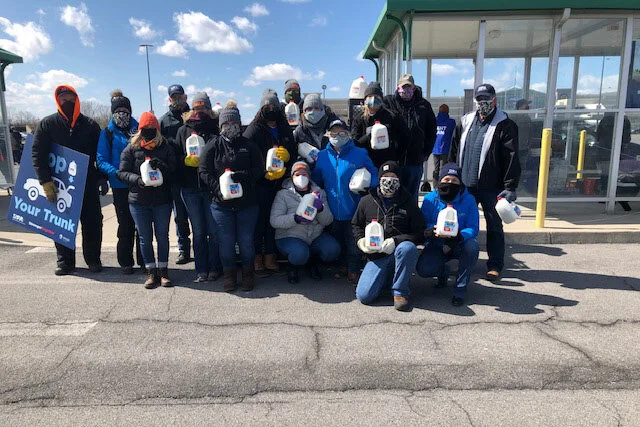
DFA employees pose for a photo at a Destiny USA dairy drive through event on April 22nd, 2020, in which DFA Cares gave away fluid milk to the community. 

DFA employees pose for a photo at a Destiny USA dairy drive through event on April 22nd, 2020, in which DFA Cares gave away fluid milk to the community. 

The last few months have been a complete upset for many families across the US, leaving them without a job, dwindling savings, and hard pressed to put food on the table as community resources become stretched. Since the outbreak of Covid-19, over 30 million Americans have sought unemployment benefits, many having to wait weeks to hear back from backlogged caseworkers. Dairy Farmers of America (DFA) has worked to fill that need through their DFA Cares fund. The nationwide co-operative represents 13,000 farms across the country, with 3200 members in the Northeast alone.

“DFA Cares is a non-profit that DFA has created, and it offers the opportunity for scholarships for students in agricultural careers, and support for members that are experiencing extreme hardship due to weather, crop failure, etc.,” said Jennifer Houston, the senior director of marketing and council affairs for DFA in the Northeast. “In light of everything that is going, on we created an offset branch called Farmers Feeding Families Fund (FFFF). With the outbreak of COVID-19 and the widespread closures of businesses such as restaurants, schools, hotels, etc., there has been a decrease in demand for dairy products. In many cases there is no home for the milk that we were marketing, and our farmers have been forced into the position of disposing of milk. That’s a last resort, no one wants to dispose of milk. And often when that moment has been reached, we have dairy farmers coming to us, as well as people in the community asking if there’s a way to get it in to the hands of those that need it most. So in quick fashion we made the decision at DFA  to start making donations to food banks and communities to get it into the hands of those that need it. Outside of FFFF, DFA has donated over 150,000 gallons of milk. We created FFFF because we also had folks that were willing to donate money so that food banks could purchase the products and get dairy products into the food banks across the country through normal channels as well.

DFA took the initiative one step farther by partnering with Feeding America, a nationwide network of over 200 food banks providing food to approximately 46 million people. “Our members are able to go in, select their local food bank or where they’d like to see a donation of dairy products go to,” said Houston. “The food bank can then purchase dairy products through a normal mechanism or purchase a retailer. The farmer/processor then gets paid for their product through the normal supply chain. As a dairy co-operative that is owned by family farmers, we’re dedicated to providing nutrious dairy foods to families across the board.”

For those interested in learning more about the program, please visit www.dfamilk.com/dfacares

Important Words From COVID-19

Caption: Volunteers at the Elmcor Food Pantry, Queens, NY, prepare food packages filled with produce and dairy products from upstate NY farms.

Caption: Volunteers at the Elmcor Food Pantry, Queens, NY, prepare food packages filled with produce and dairy products from upstate NY farms.

By, Rick Zimmerman

Even though we all are growing weary from the massive disruption of our lives, we are becoming accustomed to this new world.  B.C. has a new meaning: “Before COVID-19”.  We know that the future will not completely return us to pre-COVID-19 status, and we will determine what the new normal looks like.  This evolutionary process is remarkably rapid, particularly when you reflect on events that occurred just a couple of months ago.  This experience will make us stronger, more resilient and the following words have taken on new meaning.

Patience: As someone who is often impatient, this epidemic has tested my limits and I have surprised myself.  It appears that my patience has been stretched beyond what I thought possible.  That does not mean I don’t relapse at times, but I quickly pause and realize that there are millions of people who are much worse off than me and that I have much to be thankful for.  I am thankful for the ability to practice patience on a daily basis.

Respect:  One critical element for successfully transitioning from this pandemic is respect for authorities who have the responsibility to manage through this crisis and lead our society to a better place. We may not always agree with the objectives, strategies, tact, or tenor of the authority in charge.  Without respect from our society, the imposed inconveniences and rules get ignored and the crisis lingers.  Respect and patience work together to enable our leaders, who were elected to handle such crisis, find the path forward and bring us out to the other side.

Empathy: Always an important trait to aspire to, this one is mandatory during current times to keep our society grounded.  Concern for each other brings out the best in us and fortunately we are seeing many good examples of empathy in our community, our country, and our world.  Once empathy is employed, it becomes a recharging source of energy and purpose.  Our society is sustained through the empathetic actions of its people.  

Adaptation: As a member of the agriculture community, I know we are good at adaptation.  Our business model requires that we remain nimble and flexible, to be able to pivot immediately given the circumstances.  COVID-19 has allowed us to demonstrate our adaptability to the rest of society.  A can-do attitude is part of our DNA because it is this trait that has helped us to survive and thrive in the face of adversity.  COVID-19 is testing our adaptability, but the stories of success are all around us and I am proud to be a member of the agriculture community.

New Opportunities:  This characteristic walks hand in hand with adaptability.  It is an attitude that permeates all good business leaders because they know that those who identify and develop the next new opportunity, in the face of adversity, will be better equipped to thrive going forward.  COVID-19 is creating new opportunities within the food and agriculture system.  Keep your eyes and minds open and be receptive.

Silver Linings:  This phrase is the reason why I wrote this column.  A “silver lining within a dark cloud” is the more precise reference and is often used during times like this.  I challenge you to look for the silver linings from COVID-19.  They are all around us, and they motivate and encourage us because they are proof that there will be a brighter day ahead.  One silver lining example I am involved in is the shipment of fresh fruit, vegetables, and dairy products from upstate farms to the epicenter of COVID-19: Elmhurst Queens.  This part of town tends to be a food desert without a pandemic, so things went from bad to worse when NYC was shut down.  Fortunately, the farm - city connection was in place and, in a matter of a few phone calls, along with the can-do attitude, farmers stepped up to the plate (pun intended).  Weekly for the past month, a trailer load of 40,000-45,000 pounds of fresh food has been loaded, delivered, and distributed to thousands of people in need in Queens. Through Governor Cuomo’s Nourish New York Program, farmers are getting paid for their fruit, vegetables and dairy products which otherwise may not have a market. Definitely a silver lining to this dark cloud! 

This pandemic has challenged us in ways we never imagined, and our industry and society will be better as a result. 

NEAFA Supports NYS Efforts to bring relief to Dairy Farmers, Foodbanks

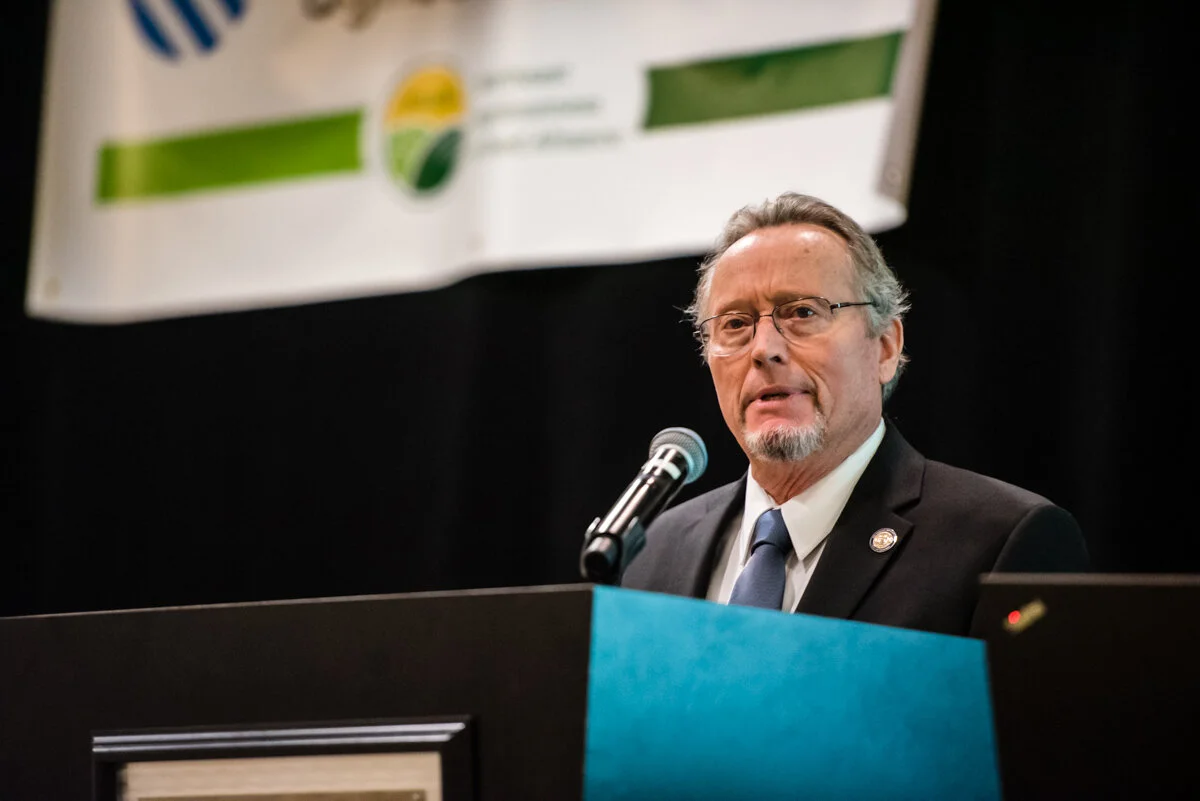
NYS Agriculture Commissioner Richard A. Ball during the 2020 NEAFA Annual Meeting in Albany, NY on Feb. 5th, 2020.

NYS Agriculture Commissioner Richard A. Ball during the 2020 NEAFA Annual Meeting in Albany, NY on Feb. 5th, 2020.

The Northeast Agribusiness and Feed Alliance (NEAFA) recognizes New York State (NYS) Governor Andrew Cuomo and NYS Agriculture Commissioner Richard A. Ball for their leadership in guiding USDA’s effort to provide essential support to the dairy industry during this extraordinary time. Commissioner Ball’s letter to United States Department of Agriculture (USDA) Secretary Sonny Perdue today calls for continued and additional aid for NYS dairy farmers during the COVID-19 pandemic. The economic impact on the US dairy industry resulting from the COVID-19 pandemic has not been appropriately addressed through current emergency relief measures. Additional action is essential to stem the tide of market loss due to the economic shutdown.

In addition, NEAFA supports the efforts of the Nourish NY Program to get wholesome food, including dairy products, to people in need resulting from the economic shutdown. Launched by Gov. Cuomo on April 27th, this new program provides $25 million for emergency food providers and food banks throughout NYS for the purchase of dairy and other agricultural products from NYS farms and processors.

Commissioner Ball said, “The Coronavirus Food Assistance Program (CFAP) provides critical dollars to assist in the purchase of agricultural products that will then be provided to our food banks, which will build on our Nourish NY initiative. However, after reviewing USDA’s projections of losses for several agricultural sectors and the actual payments to be made to New York dairy producers, I am concerned about the effectiveness of the CFAP in providing sufficient direct relief to the dairy industry. New York’s dairy industry is our largest agricultural sector and we need to ensure we are doing all we can to make sure our dairy farmers are receiving the help they need. Adjustments should be made to the CFAP to resolve this funding gap.”

John's Jottings

NEAFA057.jpg

By John Clark

April 2020 is historic, though not in the way we would like. The government at state and federal levels has ordered all “non-essential” businesses closed due to the threat of the Chinese Flu. NEAFA members and their customers are showing incredible resilience during this time of uncertainty. When Executive Director Rick Zimmerman checked in with our board members, they responded with how they have changed their daily business practices. First and foremost was clearly the safety of the people that work daily manufacturing and distributing feed and feed products.

Feed manufacturers, dealers and distributors, like the people they serve, are hardworking, resilient folks. It is impressive to see how quickly they implemented these safety practices to keep everyone safe. Employees are encouraged to self-monitor and stay at home if they feel sick. Employees are encouraged to be comfortable with their new working environment and if not, they are offered leave, in many cases paid leave.

NEAFA would like to thank those businesses who responded and gave us a glimpse into their continued commitment to safe food production and abundant food supply.

Recently, there has been wide spread coverage about the required milk dumping. My heart, like yours, breaks for those that have worked incredibly hard to make a first rate, high quality product only to have to watch the fruits of their labor be dumped down the drain. The economics of it are horrible enough, but the sheer frustration must be difficult to endure. Beef producers are in a similar boat with little ability to ship cattle ready for market. Considering the plight of dairy farmers and beef farmers, the industries that support those businesses, like feed, are under personal stress. 

A friend of mine told me a personal story that made me reach out to Ed Staehr, Executive Director of NY FarmNet. He in turn got Kate Downes and Brenda O’Brien involved to create a webinar focusing on stress management, how to identify stress in ourselves and others, and what to do when you are under stress.  You can join the webinar on Wed April 29th from 9 – 11 AM. Registration is easy to do on-line, and it’s free for any that wishes to participate! We have had an exceptionally good response so far, but there is always room for more.

The NEAFA board of directors has decided to move forward with its strategic planning update process. Prior to its completion, you will receive a survey to help us focus attention where it is needed the most. Please fill out that survey thoughtfully and timely. 

Lastly, please keep safe out there. Use common sense and follow the guidelines. If you are a prayerful person, keep our leaders in those prayers. Whatever side of the aisle they stand socially distanced from, they deserve our encouragement, our prayers, and good thoughts towards resolving the health and economic crisis that we are facing.

NEAFA will be keeping you updated on upcoming events as decisions are made. Thank you for your attention and your support of NEAFA. We are here to represent your interests and help the Northeastern agricultural community flourish, especially during difficult times.

John’s jottings over and out for April.

NEAFA Remembers Industry Leaders

To our NEAFA membership, we have the sad duty of sharing the recent passing of three industry leaders. Lloyd James of McDowell and Walker, Robert “Bob” Nearing Jr., former board member of Eastern Federation of Feed Merchants, NEAFA Board member, CFD and owner of Cochecton Mills, and Robert D Wellington, the long time Chief Economist at AgriMark. Each of these individuals were not only friends and colleagues, but integral parts of the growth and success seen by agribusiness in the northeast for decades. Their knowledge and commitment to our industry will be missed. Our most sincere condolences to their families. 

Lloyd E. James, 87, died March 22 after a brief sickness. James was a dairy farmer and previous owner of McDowell & Walker, a feed and fertilizer manufacturer with three retail stores in Delhi, Afton and Sidney. For more information, click here.

Robert Arthur Nearing Jr., 76, passed away on March 30, 2020 and is survived by his wife of fifty years, Mary Ann (Wagner). A graduate of Mohawk Valley Community College and a United States Army veteran, Nearing joined his family business, Cocheton Mills, Inc. in Cochecton, NY for almost 50 years of service to the farming and agribusiness communities. For more information, click here.

Robert “Bob” Dwight Wellington, 65, passed away March 29, 2020. Wellington held Bachelor and Master’s Degrees in Agricultural Economics from Rutgers University, where he also taught. Wellington served numerous roles in the agricultural community, including working as a Milk Market Administrator's Officer in New York City for 11 years, where he was the Chief of Research and Senior Economist. Wellington began his 30-year career with Agri-Mark in 1989, where he was the Senior Vice President of Economics, Communications and Legislative Affairs. For more information, click here.

Report from Montpelier

By Margaret Laggis

The Vermont legislature continues to meet via Zoom meeting.  They are trying to focus mostly on what they can do to help Vermonters during the pandemic.  Vermont is one of the very few States whose legislatures didn’t adjourn or at least take several months off.  
 
The Agriculture committees in both the House and Senate have focused their energy over the last several weeks on two main issues.  Opening up Farmers’ Markets as soon and as safely as possible, and dealing with a growing concern over the spreading of sludge on farm fields. Farmers’ Markets have been cleared to open on May 1st with social distancing guidelines in place.  It is likely that the State may decide to stop the practice of spreading sludge on farm fields following the detection of PFAS in some water samples.
 
Both committees are very concerned about how agriculture will look in the near and long term with dairies dumping milk, grocery stores not keeping shelves stocked, and vegetable and cheese producers losing huge volumes of business due to restaurant closures.
 
The VT Farm Bureau spoke to the committee about fairs and field days and the issue of trying to make contingency plans since many of them have very high fixed costs and have paid for entertainment that they may now not be able to host.
 Those that normally work in the legislature are struggling to find better ways to effectively communicate with legislators than using traditional methods.  Members are being swamped with the needs of their constituents and are overwhelmed.  It is certainly interesting to be a part of these unprecedented times.

COVID-19 Impacts NYS Budget

NYS Senator James Seward receives a Certificate of Appreciation for his service to agriculture from NEAFA President John Clark.

NYS Senator James Seward receives a Certificate of Appreciation for his service to agriculture from NEAFA President John Clark.

By Rick Zimmerman

Governor Cuomo and NYS lawmakers came to terms early April on a spending plan for the 2020-21 state fiscal year. Given the COVID-19 crisis, there was much speculation as whether there would even be a new state budget. Not only was it physically difficult for lawmakers to pass a spending plan, the pandemic also led to an increasing gap between revenues and expenditures. Suffice it to say, the process and procedure was quite unorthodox.

From an agricultural perspective, Governor Cuomo’s executive budget, released mid-January, contained an ag program spending plan that was positively received by agricultural leaders. Due to the Governor’s initial spending proposals, the annual process of restoring funding to the long list of ag programs became a bit easier this year. Assembly and Senate Agriculture Committee Chairs Donna Lupardo and Jen Metzger were optimistic that funding levels would be restored and perhaps increased in some cases. The ag community, including the Northeast Agribusiness and Feed Alliance (NEAFA), actively collaborated on the lobbying front to assure adequate funding for the essential programs including PRO-DAIRY, NY FarmNet, Integrated Pest Management, Farm Viability Institute, the Farm Labor Specialist, Cornell Veterinary Diagnostic Lab, among others.  NEAFA’s February 4th lobby day at the NYS Capitol was a timely contribution to the ag lobby’s collaborative efforts to secure funding to these critical programs. Then the COVID-19 pandemic hit!

The state budget process ground to a halt when the Capitol was locked to outside visitors and the legislature had to figure out how to vote without being in the same room. Unfortunately, several lawmakers, including Senator Jim Seward, who was recognized by NEAFA in February for his outstanding service to agriculture, was stricken by COVID-19. Eventually, the voting rules were changed, and negotiations resumed between the legislature and the Governor’s Office. Lobbyists tried to follow along via emails, phone calls and texts. At the same time however, the state budget deficit continued to balloon from the original estimate of $5 billion to as much as $15 billion. 

In the wee hours of April 3rd, the final budget bills were passed. As the dust settled, it became clear that unprecedented authority was granted to the Governor to adjust spending levels during the fiscal year, as determined by quarterly revenue forecasts that could change drastically due to the pandemic and the closure of non-essential businesses. Because of this, there is still a chance that agricultural program appropriations could be reduced from their current levels. Such actions will impact programs, people, and research that our industry depends upon. NEAFA and other industry leaders will continue to monitor the situation and fight for the funding that our industry needs.

Some agricultural programs took funding hits, particularly the Farm Viability Institute and the Veterinary Diagnostic Lab. A list of specific programs and their funding levels is available at the end of the article.

NY Agriculture Committee Chairs Senator Jen Metzger and Assemblywoman Donna Lupardo should be lauded for their tireless leadership and commitment to agricultural funding priorities. NEAFA appreciates their great work on behalf of the agriculture industry. In addition we recognize the NY Assembly and Senate agriculture committee members, including NY Senators Rachael May, James Skoufis, Robert Ortt, Pam Helming, and NYS Assemblymembers Aileen Gunther, Al Stirpe, Angelo Santabarbara, Carrie Woerner, Billy Jones, Marianne Buttenschon, Didi Barrett, Ken Blankenbush, Cliff Crouch, Gary Finch, Steve Hawley, Mike Fitzpatrick and Brian Miller for their ongoing support of New York’s agriculture industry.  

New York Agricultural Program Funding:

Farm Viability Institute: $1.55 million Reduced by $350,000; Additional funds promised to restore to last year’s levels 

Veterinary Diagnostic Lab: $4.632 million; Reduced by $200,000 over last year

PRO-DAIRY: $1.201 million Core Program

Profit Teams: $220,000

Dairy Acceleration Program: $700,000

Ag Nonpoint Source Pollution Control: $18 million

NY FarmNet: $872,000 / $400,000 Mental Health Component

Integrated Pest Management: $1 million

Pesticide Management Education Program: $250,000

Farm Labor Specialist: $200,000

Agriculture Education and Outreach Programs

  • FFA: $842,000

  • Agriculture in the Classroom: $380,000

  • Agriculture Educators: $416,000

Annual 2020 Herd Health and Nutrition Conference Draws Record E-Attendance

Speakers gathered online for seminars and a panel discussion during the 2020 Herd Health and Nutrition Conference April 5th, 2020.

Speakers gathered online for seminars and a panel discussion during the 2020 Herd Health and Nutrition Conference April 5th, 2020.

Due to Covid-19 and social distancing restrictions, the 2020 Herd Health and Nutrition Conference moved to an online webinar format on April 5th, 2020, instead of being held in its traditional home of Syracuse. NEAFA would like to thank Cornell PRO-DAIRY for the great job that they did in making the switch to an online conference, securing the speakers, handling the webinar logistics, and assuring that conference sponsors were appropriately recognized. “NEAFA is extremely pleased about the smooth transition from a traditional conference to a virtual experience,” said NEAFA President John Clark. “NEAFA values our conference partnership with PRO-DAIRY and we very much appreciate the strong support from our industry sponsors.” Attendance reached an all-time high of 424 attendees, with twenty-nine different sponsors.  Next year, the conference will be held April 5-6, 2021 at the Doubletree Hotel in East Syracuse, NY. Due to the success of this online format, a hybrid approach is being investigated for next year.

The one day program included seminars from industry leaders and educators, including Bill Weiss of The Ohio State University, on energy and protein interactions, Phil Cardoso, University of Illinois, on new perspectives in transition cow management, Luiz Ferraretto, University of Florida, on optimizing the role of starch as an energy source in dairy cattle diets, and Trevor DeVries, University of Guelph, on feed bunk management. The day wrapped up with a panel discussion on feed bunk management moderated by Corwin Holtz of Holtz-Nelson Dairy Consultants with Bill Bullard of Brigeen Farms, Inc., and Amos Smith of Lawnel Farms, Inc. answering questions on how they manage feed on their respective farms.

Weiss kicked off the day with his talk on how protein and energy interact and their ability to limit milk production. Weiss believes that the “industry has gone too far in recommending low protein diets. Lower protein diets give you less energy, but the other thing that worries me is the uncertainty of feed. You’re never certain exactly what’s in the diet, and there should be some sort of cushion. We should aim for 17.5%, because at 15% there’s no spare room.”

Dr. Cardoso continued the day by discussing key nutritional strategies and feeding management during the pre-calving and post-calving periods. He believes that the impacts of the transition program should be evaluated in a holistic way that considers disease occurrence, productivity, and fertility.

After a short break for lunch, Dr. Ferraretto addressed starch and its importance to dairy cows and strategies to optimize its digestibility and utilization by lactating animals. This lead into DeVries’ talk on bunk feed management, a prelude to the panel discussion for the day. DeVries addressed how dairy cow production, health, and efficiency are optimized when they eat a consistent diet, both in time and composition. From a feed bunk management perspective, this includes ensuring rations are delivered accurately and precisely, as well as by ensuring cows have good continuous access to that feed. DeVries joined in on the panel discussion with Bullard and Smith as well. 

The panel discussion took on a global perspective on feeding management during Bullard and Smith’s discussion. “I think it comes down to the ability to measure parameters that you otherwise may not be able to,” said Smith. “I remember being a student at Cornell years ago now, and in my nutrition class, we were talking about data. Whether you’re in a feeding system or collecting data in the field, if you can’t measure it you can’t manage it. You need to know what’s actually happening to make good management decisions. Which is why we invested in feedwatch and weighrite. They both tie so nicely in with dairy cows, and they work well together. Without that data piece, it makes things harder. I attribute a lot of our success over the years to using the tools that we’ve invested in.

Bullard added that consistency is also key. “The consistency of the feed going on the mixer, you need to make sure that every load, every feed is the same. We try to make sure that the same feed is dropped within a couple of minutes of when they were done the day before. It’s important to keep the same routine day in day out.” The panel also touched on adding feed pushups, keeping bunks covered and minimizing top exposure, labor efficiency, and maintain scales and mixer calibrations, among other topics.

NEAFA would like to thank all of our speakers, sponsors, and participants for their flexibility during the pandemic. We hope to see everyone, either in person or virtually next year as well.

Covid-19 Response in the Feed Industry

Goldstar Feed and Grain has implemented strong practices to combat covid-19

Goldstar Feed and Grain has implemented strong practices to combat covid-19

As the Covid-19 pandemic continues to reshape the ways that our country and the rest of the world operates, NEAFA and its membership are committed to maintaining safe working conditions as our essential businesses continue to work. 

The actions recently taken by Gold Star Feed and Grain (GSFG) are one example of how the industry is adapting to the current situation. “We’re very focused on employee safety,” said Andy Dugan, past NEAFA President and General Manager of GSFG. “Usually that involves avoiding injury on a piece of equipment, or a proactive measure to prevent a future problem. But we applied that same process to this invisible bug. We’ve been sanitizing our workplace since March 2nd. It started out with washing hands and sanitizing your work station and 2 ft distancing. Then 6 ft distancing and sanitizing common areas. The owners started buying lunch for everyone, because we want them to stay here and not get sick. That attitude has helped us to date with our goal of employee safety. We’ve had a couple of people tested but no positives. We’ve also set a protocol that if you have a fever over 100.4 go home, period end of story. And don’t come back until your temperature is below 100.4 degrees for 24 hours or 72 hours or 14 days depending on circumstances. Everyone that works at our facilities are hands on people. My staff is the admin group, and 80% have been working are at home since mid March for more than 2 weeks. Twenty percent come in for the physical and handling paper tasks we require.”

GSFG has also taken precautions with whom can enter the building during work hours. “We lock our doors right now, no one is allowed in without a key,” said Dugan. “A lot of our customers are on the same page with restricting visitors and with social distancing. Our sales people aren’t making normal sales visits, just doing phone work, computer work, or records analysis. They still have to physically go to farms on occasion for a number of reasons, but our people adhere to our policies while on other people’s sites. I hold myself to the same standard when I have to go out.”

Dugan also touched on the topic of farmers that are currently facing difficult choices as the pandemic has cut into dairy farm profits.  “Our company and myself personally get very concerned about increasing farmers’ debt in a non-structured manner. It’s something that our industries grapple with, and I do not want to help the farmer get in over their head in debt. I want to help them be profitable. It’s a massive topic to tackle, and there are a wide variety opinions from farmers and feed companies on what’s best to do. What I’ll say is if you understand your costs of production and if we assume that future milk price will be below the cost of production what should you do? You could take on more debt, or look to remove nonproductive assets, or reduce feed costs which will reduce your milk output. These are all discussions that we want dairyman thinking through right now. When you’re profitable you want the last drop of milk out of your cow - when you’re not profitable, maybe squeezing that last drop of milk out might not be the best strategy.”

Dugan doesn’t however see this being a long term slump for farmers. “The unforeseen cannot be planned for. And when it happens it’s always a much more positive or negative change than what we would have thought of previously. Because in the markets (i.e. milk, feed, soy, corn markets), people’s perceptions of what is going to happen dictates the prices. So, when things are black and everyone thinks the world is ending, prices go too low. My opinion is that this will bleed out faster and turn around faster and become more positive than most people can believe at this time. There are 350 million people in the US that have to eat food tomorrow, next week, next month and next year. So agricultural businesses inside the US will be the ones that will provide that food for all those people. You can agree to stop buying jewelry for a year or two, but you cannot stop buying food. Our NEAFA organization is working overtime to help politicians understand what they can do to help feed America. Members of NEAFA benefit from that hard work. If we manage our businesses appropriately during difficult times, we will all enjoy the favorable times when they return.”

NY State Budget, Pesticide Bans, Farm Labor Law, & Legislative Priorities for NEAFA

Hal McCabe and Lucy Shephard of the Legislative Commission on Rural Resources meet with NEAFA members as part of the annual NEAFA lobby day. 

Hal McCabe and Lucy Shephard of the Legislative Commission on Rural Resources meet with NEAFA members as part of the annual NEAFA lobby day. 

 Members of the NEAFA lobbying team met with Assembly Agriculture Committee Chair Donna Lupardo

 Members of the NEAFA lobbying team met with Assembly Agriculture Committee Chair Donna Lupardo

In conjunction with NEAFA’s Annual Meeting, twenty four volunteer advocates worked together to lobby Albany lawmakers for important state supported agricultural programs on February 4th, 2020.  The April 1st budget deadline was on the minds of legislators as NEAFA advocates competed for space in the halls of the Legislative Office Building with dozens of other special interest groups. 

The Governor’s Executive Budget, introduced in mid-January, includes funding for many significant agricultural programs, including PRO-DAIRY, Integrated Pest Management, and NY FarmNet.  However, the Governor’s current proposal leaves an approximately $4 million deficit between his numbers and current budget appropriations. Therefore, lawmakers must prioritize their budget options, and the ag community is actively working with them to ensure legislators have their spending priorities straight.  

The NEAFA budget priorities includes $1.201 for PRO-DAIRY, $2.9 million for NY Farm Viability Institute: $2.9 million, $900,000 core program and $500,000 mental health component for NY FarmNet, $200,000 for Farm Labor Specialist, $842,000 for FFA, $18 million for Ag Non-Point Pollution Control, and $1 million for IPM.

In addition to advocating for budget priorities, NEAFA volunteer lobbyists warned legislators about the perils of banning pesticides. Several bills have been introduced in the NYS Legislature that would ban pesticides ranging from glyphosate and neonicotinoids to atrazine and simazine.  These bills ignore the Department of Environmental Conservation’s authority to review and register pesticide use in New York, and the bills remove the science driven decision-making process currently employed by DEC experts.  NEAFA advocates advised state lawmakers to avoid playing politics and keep DEC in control of pesticide use.

Another budget item this year is legislation to fix the farm labor law that was passed in 2019.  The agricultural community has been aggressively promoting amendments that will address issues that are the subject of a lawsuit brought against the state by the Northeast Dairy Producers Association and the NYS Vegetable Growers Association.  Legislative fixes are essential to making the new law viable in context to farm family members and salaried supervisor employees.  NEAFA actively supports these legislative amendments. 

Despite the new hurdles created by the COVID-19 pandemic, lawmakers are working aggressively to meet the April 1st adoption deadline for the state budget. NEAFA will continue to work with legislators to make sure that the economic needs of the agricultural community are met within the state budget.