Feed and Grain Operations: EPCRA II Requires Combustible Dust Reporting

The U.S. Environmental Protection Agency in 2017 changed the Tier II reporting requirements and format under the federal Emergency Planning and Community Right-to-Know Act (EPCRA, Sections 311 and 312). Below are frequently asked questions on how these requirements, including changes on combustible dust reporting, may impact your facilities.

Why were the EPCRA reporting requirements changed?

The agency changed the EPCRA reporting systems and its associated Tier II form to make it consistent with the Occupational Safety and Health Administration’s (OSHA) changes to the Hazard Communication Standard in 2012 (HCS 2012). Overall, the changes in the HCS 2012 and for EPCRA reporting were intended to:

  • ensure safer management of hazardous materials at a large universe of U.S. facilities; and

  • improve emergency response information available to local and state emergency planning authorities and first responders.

What does the Tier II reporting system do?

The EPCRA Tier I and Tier II reporting system assists Local Emergency Planning Committees (LEPCs) with developing and managing local emergency response plans. As many are aware, companies complete Tier II reports to achieve several objectives, including providing:

  • general information on hazardous chemicals; and

  • specific information on each hazardous chemical onsite at their facility.

This information is used by local emergency planning committees for developing or modifying their response plans in case of a fire, explosion, natural disaster or other emergency.

What did the Tier II changes require?

As part of a Tier II inventory report, a facility must designate the (1) physical and (2) health hazards associated with each hazardous chemical.

For the new reporting form, facilities for the first time were required to choose from among 13 possible physical hazards and 11 possible health hazards.

Concerns over the reporting of combustible dust

One of the new physical hazards required for Tier II reporting in 2017 was combustible dust. While feed and grain operations had no general concerns in responding to most or all of the other revisions associated with the new Tier II format, there was widespread confusion about how to properly complete the form to report combustible dust.

EPA has acknowledged industry concerns and has provided feedback to assist feed and grain operations in proper reporting

The industry associations worked with the EPA in 2018 in order to gain greater clarity and ensure proper industry compliance with the revised Tier II form reporting requirements.

These discussions covered a wide range of issues and questions. Not only has the EPA recognized there are legitimate questions about how feed and grain facilities are to report combustible dust, the agency has provided the associations significant feedback to help resolve the issue.

EPA agrees with industry that there is no accepted or uniform method for Tier II reporting of combustible dust

While grain and feed operations are already subject to the OSHA grain handling standard to ensure the control and elimination of combustible dust hazards, there is currently no accepted industry method to appropriately estimate or measure potential volumes of combustible dust at a facility. It is present in highly variable amounts as a byproduct of physical processes and its volume is based on a range of other factors. It is not “manufactured” in any traditional sense under EPCRA.

The EPA recognizes that the use of estimation methodologies for calculating combustible dust in facilities can produce unreliable and potentially arbitrary numerical results. For example, previous guidance from the EPA, and more recent guidance from a very small number of local jurisdictions, imply that a facility should assume that one-tenth of one percent of grain onsite contains combustible dusts.

The agency acknowledges the industry’s views and the leadership of the emergency planning community that an arbitrary calculation method that both conflicts with EPA EPCRA guidance on mixtures and has no technical or factual basis does not provide a meaningful estimate. For this reason, the vast majority of local and state jurisdictions do not use an estimation methodology. The agency has also acknowledged that for the purposes of Tier II reporting, it is not necessary to calculate the potential combustible dust in unprocessed stored ingredients.

EPA and industry agree on the following approach for combustible dust reporting

The EPA agrees that there are two simple, reasonable options to complete the Tier II form for combustible dust, which ensures emergency planners have the relevant information they need about potential combustible concerns at a feed or grain operation.

See the two reporting options below, depending on the nature or size of your feed or grain operation:

Reporting Option #1 – If combustible dust is likely present at any level below the 10,000-pound threshold

If a facility has a reasonable basis to conclude that it has some volume of combustible dust, but it is below the 10,000-pound threshold, then a facility should:

  • check the “combustible dust” box in the “physical hazards” column; and

  • check the “below reporting thresholds” box in the last column (the “additional reporting information” column) of the Tier II form.

Reporting option #1 is likely most appropriate for most facilities. EPA has concluded that there is no obligation for a facility to provide any further information if the “below reporting thresholds” is checked.

Reporting Option #2 – If combustible dust is likely above the 10,000-pound threshold

If a facility has a reasonable basis to estimate that it may have combustible dust above the 10,000-pound threshold, then it should:

  • check the box in the “physical hazards” column; and

  • complete the “inventory” column using an estimation method or calculations based on the facility’s best professional judgment.

This option may be more applicable for those facilities that collect and store combustible dust in a bin or container.

Reminder: Certain local or state jurisdictions may require additional reporting

While the EPA agrees with industry on the two options for reporting above, facilities may be subject to additional local or state Tier II reporting requirements for combustible dust.

You may need to check your county or state requirements to determine whether this may be the case and complete your Tier II report accordingly.

If you have questions or need additional information, please contact Gary Huddleston, AFIA’s director of feed manufacturing and regulatory affairs.

The copyright law of the United States (Title 17, United States Code) governs the making of photocopies or other reproductions of copyrighted material. If you would like to photocopy, otherwise reproduce, or publish any of the foregoing material, please contact AFIA's Sarah Novak or Victoria Broehm for permission.

John's Jottings

As I write this article, Christmas, New Year’s, Hanukah, and other holidays are all “in play.” As we contemplate the end of a year and the end of a decade, we also have to consider what will the new year, and decade bring? It’s popular to make new year’s resolutions to accomplish the dreams that we have for the future. What tools do you need to make those dreams and goals happen? It is in that spirit of forethought that you should consider attending the upcoming NEAFA Annual Meeting on February 4th and 5th in Albany, NY. Taking a break from your normal day to day schedule, meeting new and old industry acquaintances and friends as well as hearing from our great group of speakers can help prepare you for success in the upcoming year.

Recently, members of NEAFA’s Board of Directors were asked why they attended. There were many excellent responses, so I wanted to take the time to share a few highlights. My dear friend and past NEAFA President, Andy Dugan of Gold Star Feed and Grain says, “I attend to see folks and to be seen. Meeting vendors is important, and I enjoy hearing what my competitors are doing. In short, I attend the Annual Meeting for lots of reasons.” Current NEAFA board member Janet Beken Smith of Stamford Farmer’s Cooperative says that the time spent at the annual meeting is important for her. “I like speaking with legislators, but I don’t find the time on my own. I think direct contact with them is important. NEAFA has some stellar keynote speakers, and I like networking. It is easy to do with everyone in one place.” And finally, NEAFA Board Secretary Lon Stephens feels similar with a few twists, “…networking and learning can help us be more competitive.”

I would also like to thank our sponsors for the great response they have given us already. We have many regulars as well as some new ones, most notably Howlett Farms and Bayer Crop Science, Corteva Agriscience and Syngenta. Sponsorships help assure a successful annual meeting and are critical for funding our operations for the balance of the year.

The annual meeting is broken down into three half days. The first half day will be our usual trip to the Capitol so that we can meet with legislators. Led by NEAFA Executive Director Rick Zimmerman, there may be folks from other groups that we actively collaborate with joining us, LEAD NY & NYS FFA among them. Meeting with legislators is critically important. “Life is controlled by those who show up,” is an adage that that I truly believe in and sharing our intimate knowledge of the agricultural industry can help shape how our representatives vote.

The second half day will be feature opening remarks and with them, the introduction of Delaney Howell, a professional MC and keynote speaker. She will do an excellent job for us. Throughout the meeting there will be breakout sessions and industry updates. This day will finish with our usual special reception, with other industry groups joining us. The third half day will be jam packed, starting with the NEAFA’s Annual Business Meeting and the ever popular NYS FFA Officers with their Opening Ceremony and followed by a great line up of speakers. Peior to lunch, Howell will give her keynote, focused on a wrap up of the annual meeting coupled with her thoughts.

While some of the above may resonate , your reasons for attending are personal. To flip that around, what are the reasons that make it difficult to attend? Perhaps it’s because you won’t make an advance registration, or will forget to mark your calendar, or your daily grind is all consuming. That’s your choice and it is understandable. I would respectfully suggest that you make a conscious decision to attend the Annual Meeting. I encourage you to be proactive towards your 2020 goals and join us in Albany. Learn new things, be enthused, contribute to the discussion and enjoy yourself in February. We’re here to help.

As I close, best wishes for your families and businesses throughout the holiday season and into the new year. I’ll See you in 2020.

John’s Jottings over for 2019!

Van Amburgh to Address Animal Ag’s Carbon Footprint at 2020 Annual Meeting

Mike_VanAmburgh.jpg

Taking place February 4th and 5th at the Albany Marriott Hotel in Albany, NY, the 2020 NEAFA Annual Meeting’s theme is managing for our future. From legislative meetings to advocate for agricultural needs to a wide array of seminars and speakers, there are topics and discussions that will benefit all of our members. An annual meeting highlight will be Professor of Animal Science Mike Van Amburgh, the Stephen H. Weiss Presidential Fellow and Atkinson Sustainability Fellow at Cornell University. Van Amburgh will be tackling animal agriculture’s carbon footprint along with Chris Noble, the vice president of Noblehurst Farms and Linwood Agriculture.

“I got pretty frustrated when the FAO (Food and Agriculture Organization of the United Nations) report came out that said cows were killing the planet, because their math was flawed,” said Van Amburgh. While he plans on going into the reasons why in greater detail at the seminar, one major flaw is how people think about cattle in the larger scale of things. “The people that advocate against cattle do not understand the food system and what cattle consume in the process of making milk. At least 30% of the diet of dairy cattle are byproducts of the human food system (soybean meal, canola meal, cottonseed, beet pulp, etc), thus without the cow consuming that our total food costs would be higher, and the environmental impact would be greater.” 

Van Amburgh currently leads the development of the Cornell Net Carbohydrate and Protein System (CNCPS). “It’s an old but unique model because we’ve been working off the same framework for 40 years now. I can just about guarantee that NEAFA members use this model or at the very least research derived from it. It’s used to feed 65% of cows in North America. I was in Italy last week for a training session with 83 people from all over the world, including Taiwan and Vietnam. Worldwide, CNCPS is being used to regulate feed by approximately 30% of all cows.”

Looking at the northeast, Van Amburgh sees a lot that agribusiness leaders should be proud of. “We do a really good job in the northeast managing emissions. We have a good industry and of course there’s always room for improvement which we’re doing, but people don’t always realize how sustainable it already is. The hard part is getting that message of environmental responsibility out to the public in an appropriate way. I’m looking forward to the annual meeting and having a chance to get in front of a group of people that work in the field of agriculture and nutrition, so that we can carry on a conversation about all the positive things that we do and the opportunities that we have to improve.”

Legislative Meetings Part of 2020 NEAFA Annual Meeting

Join the Lobbying Team to Advocate for Agriculture!
By Rick Zimmerman, NEAFA Executive Director

NEAFA representatives gathered in February 2019 in the NYS Capitol to advocate for support of programs critical to the viability of NYS animal agriculture. 

NEAFA representatives gathered in February 2019 in the NYS Capitol to advocate for support of programs critical to the viability of NYS animal agriculture. 

The 2020 NEAFA Annual Meeting will include the opportunity to meet with New York State legislators and advocate for agricultural programs essential at keeping the northeastern dairy industry viable and competitive. Programs such as PRO-DAIRY, Integrated Pest Management, Agriculture Environmental Management, and the Farm Viability Institute all require annual state budget approvals for their continuation. It is essential that the agricultural community show up and share their views with legislative leaders.

All NEAFA members are encouraged to participate the morning of Tuesday February 4th. All the relevant details, including meeting appointments, transportation, necessary materials and issues briefing will be taken care of by NEAFA. All you have to do is show up at the Albany Marriott at 9:00 am, Tuesday February 4th, and be prepared to join the team! Reservations to be part of the legislative meetings can be made while registering for the Annual Meeting. Details can be found on the Alliance’s website by clicking here (https://www.northeastalliance.com/upcoming-neafa-events/2020-annual-meeting)

Annual Meeting Speaker Highlight: Kate Downes, NY FarmNet

kateheadshot1.png

The 2020 NEAFA Annual Meeting is right around the corner! Taking place February 4th and 5th at the Albany Marriott Hotel in Albany, NY, this year’s theme is managing for our future. With talks taking place with legislators and a wide array of seminars and speakers, there are topics and discussions that will benefit all of our members. The topic “Managing Stress on and off the Farm” will be delivered by Kate Downes, the outreach director at NY FarmNet.

NY FarmNet is based at Cornell University and provides free and confidential counseling for both business and personal needs of farmers and agribusinesses. “We’re best known for our crisis work with farms in financial trouble or farmers dealing with depression, but we do a lot of proactive work as well for farms that are entering a period of transition,” said Downes. “We send both financial and social help teams to farms, because quite often there’s underlying family tension as well when a business is having financial issues. They’re intricately connected, and people don’t always realize that. So, we give people the resources that they need. When we send a team to a farm, they’ll get a numbers person that is familiar with farm business management, and a people person that can work through problems there. It’s why we’re successful in helping farms survive and thrive.”

unnamed.jpg

Downes has worked with NY FarmNet for 3 years now, coordinating the training for NY FarmNet’s consultants as well as giving presentations and tabling at trade shows and events throughout the state. “I was working at Cornell for another program, and I needed a change,” said Downes. “I had lost my uncle to suicide, and looking at what NY FarmNet does, I was like oh my gosh this is so important. Joining this team ended up being a really good fit for me.” At the upcoming annual meeting, Downes is going to focus on stress management and what that means. “I want to talk about stress on the farm, what the signs of stress look like and how to talk about stress with people. My goal is to just give people the language that they may not have so that they can talk about stress and how to ask for help. It’s important to know how to approach that conversation and how to manage stress through different techniques like deep breathing and mindfulness. Farm stress is not an easy thing to talk about, and we need to talk about suicide to destigmatize it. One reason people don’t ask for help is that they’re embarrassed, and I want to let them know they don’t have to be.”

This seminar is the first time that Downes has worked with NEAFA. “I’m really looking forward to connecting with the NEAFA folks because they’re a group that I haven’t personally connected with before,” said Downes. “I want to make sure they know that we’re a reference and a great resource that is free for farmers. NY FarmNet is available 24/7, 365 days a year. And if you call you will always get a real person on the other end - you don’t have to navigate a menu or anything to talk with someone. We all need to work together and support each other. For those that don’t like to call, we also have a contact form on our website that alerts our office.”

The holidays can be a hard and stressful time for many. If you’re struggling, it’s ok and there are people that can help. You can reach NY FarmNet at 1 800-547-3276, or fill out the contact form at www.nyfarmnet.org. The National Suicide Prevention hotline is 1 800-273-8255, and the crisis text line is 741741, just text HOME. For those under 18 in need of help, they can also call the Kids Help Phone at 1 800-668-6868.

NEAFA Congratulates Congress for Passage of USMCA

The Northeast Agribusiness and Feed Alliance (NEAFA) applauds Congress and the President of the United States for finalizing an agreement for the United States Mexico Canada Trade Agreement (USMCA). “The northeastern agricultural industry, particularly the dairy industry, will benefit from a more balanced trading relationship with Canada and Mexico”, Stated John Clark, NEAFA President. “We are optimistic that this important step will usher more successful trade deals with other important trading partners.” 

The agreement will advance United States’ agricultural interests in two of the most important markets for American farmers, ranchers, and agribusinesses. USMCA builds upon our existing markets to expand US food and agricultural exports and support food processing and rural jobs. “The agreement includes updates for the dairy industry, a vital requirement for many of NEAFA’s members”, stated Clark. “According to the USDA, America’s dairy farmers will have expanded market opportunities in Canada for a wide variety of dairy products. Specifically, Canada agreed to eliminate the unfair Class 6 and 7 milk pricing programs that allowed their farmers to undersell U.S. producers.”

Moving forward, NEAFA calls for the Senate to quickly pass USMCA. “Every day that Congress fails to pass this important piece of legislation is another day that US agriculture will fall further behind worldwide competition,” said Clark. “We are thankful that this important update to US trade agreements with Canada and Mexico has been reached and look forward to its final passage in the Senate.”

Register Today for AFIA-KSU 500: Fundamentals of Feed Manufacturing

The American Feed Industry Association has opened registration for its winter online feed manufacturing course, conducted in partnership with Kansas State University, Feb. 11 – March 17.

The five-week, "AFIA 500: Fundamentals of Feed Manufacturing" distance education program provides an in-depth understanding of the feed manufacturing process, while allowing participants to work at their own pace and engage in online discussions with other students and university instructors.

The course covers a variety of topics, including: the process flow from particle size reduction, to batching and mixing, conditioning and pelleting, boilers, post-pellet systems, packaging and loadout, and maintenance.

To date, roughly 500 individuals have earned a certificate for completing this course. Program fees are $499 for members and $685 for nonmembers. The deadline to register is Monday, Jan. 27.

KSU is currently the only U.S. university to offer a bachelor of science degree in feed manufacturing and is home to the IGP Institute. For more than 35 years, the IGP Institute has established a worldwide reputation as a center of excellence for international programs related to flour milling and grain processing, feed manufacturing and grain quality management, and grain marketing and risk management focused on corn, grain sorghum, soybeans and wheat. The courses are taught by a diverse blend of individuals from KSU and within the feed and allied industries and provide in-depth training on all aspects related to feed manufacturing.

Visit the course website for more information and to register. Course size is limited, so be sure to register early!

Delaney Howell to Highlight NEAFA 2020 Annual Meeting

Delaney Howell will be leading the 2020 NEAFA Annual Meeting, February 4-5th in Albany, NY.

Delaney Howell will be leading the 2020 NEAFA Annual Meeting, February 4-5th in Albany, NY.

The Northeast Agribusiness & Feed Alliance (NEAFA) is featuring Delaney Howell, co-host of Iowa Public Radio’s Market to Market, at their 2020 NEAFA Annual Meeting and Forum at the Albany Marriott Hotel from February 4-5, 2020. The event is a fantastic way to network and hear from excellent speakers on the forum theme: Managing for our Future. 

This year's forum will take on many prevailing issues affecting modern day agriculture. “Managing for our future is essential  for our industry as we continue to experience tremendous internal and external challenges,” stated Conventions Committee Chair, Mark Anderson. “Industry consolidation, trade wars, low commodity prices, and climate change are a few of the issues that will be addressed by an outstanding lineup of speakers.  Our Annual Forum is open to all who are interested in being part of the discussions.”

The event will be lead by ag radio host Delaney Howell and will include a variety of different speakers. Howell is well known for her roles on Market to Market, This Week in Agribusiness and Agri-Pulse. She grew up on a family feedlot farm in Southeast Iowa, and has been involved in agriculture from a very young age. Howell holds a Bachelor's of Science degree in Agricultural Sciences and minors in Broadcasting and International Studies from Northwest Missouri State University and a Master's in Agricultural Communications through Texas Tech University.

Other notables at the upcoming annual meeting include Richard A. Ball, the New York commissioner of agriculture will be addressing the current state of agriculture and markets. Joining the commissioner will be Christopher Wolf, Professor of Agriculture Economics at Cornell University as well as Mike VanAmburgh, Professor of Animal Science at Cornell University. Chris Noble, the Vice President of Linwood Agriculture and Noblehurst Farms. Several industry topical seminars will be offered Tuesday afternoon, February 4th. 

Registration and sponsorship information can be found through the NEAFA website at northeastalliance.com or by clicking here.

NEAFA Meets with New England Ag Commissioners; Neonics a Common Topic

by Rick Zimmerman, NEAFA Executive Director

New Hampshire agriculture commissioner When Jasper, center, meets with NEAFA representatives Andy Dugan, Art Whitman and Rick Zimmerman. AFIA's Louise Calderwood joined the delegation that also travelled to Massachusetts and Maine.

New Hampshire agriculture commissioner When Jasper, center, meets with NEAFA representatives Andy Dugan, Art Whitman and Rick Zimmerman. AFIA's Louise Calderwood joined the delegation that also travelled to Massachusetts and Maine.

Working with state government leaders throughout the northeast is a priority for the Northeast Agribusiness and Feed Alliance (NEAFA). NEAFA put this objective into action earlier this month when a NEAFA leadership team road tripped from Boston, MA, to Concord, NH, and finally to Augusta, ME, to meet with state commissioners of agriculture. This annual event fortifies working relationships and demonstrates our collaboration with state agricultural organizations. This year’s trip allowed us to meet two relatively new agriculture commissioners: Shawn Jasper of New Hampshire, Amanda Beal of Maine, and Massachusetts’ John Lebeaux, who is entering his fifth year in office. All three commissioners were very interested in what we had to say.

Andy Dugan, Chair of the NEAFA Government Relations Committee, travelled with Past Chair Art Whitman, Louise Calderwood of the American Feed Industry Association, and NEAFA Executive Director Rick Zimmerman for two days of meetings, miles and meals. They were joined by state-based national agribusiness company representatives in Boston and Concord, who complimented the discussions. Together, NEAFA and these industry leaders talked about the importance of the agribusiness industries in each respective state and invited the commissioners to tour our facilities. While the conversations were wide ranging, inevitably discussions focused on neonicotinoid pesticides.

Nine U.S. state legislatures, including four in the northeast, have either enacted or are considering bills to address the complex issue of pollinator health, including the presumed impact of neonicotinoid pesticides. Neonicotinoids became commercially available in the late 1990s, and by 2014 virtually all corn and about a third of the U.S. soybean acreage was planted with neonicotinoid-treated seeds due to their perceived safety and efficacy. Recent studies have implicated this class of pesticides as a contributing cause to the decline in pollinators nationwide.

Several northeastern states are considering a wide variety of approaches to limit the use of neonicotinoid pesticides. The New York Senate Environmental Conservation Committee for example, is considering a bill that proposes to prohibit all use of atrazine, metalaxyl and neonicotinoids. Legislation currently in the Massachusetts Committee on Ways and Means proposes neonicotinoids to be registered as restricted use pesticides.

Some states have already enacted legislation to increase regulatory oversight of neonicotinoid use. In 2017, Connecticut passed legislation requiring development of best practices to minimize the airborne release of neonicotinoid insecticide dust from treated seeds. The following year, Vermont pass legislation into law that requires some forms of neonicotinoids to be registered as restricted use pesticides. Unlike Massachusetts, agricultural uses in Vermont are exempt from oversight by the new law.

NEAFA supports effective science-based pest control methods that pose minimal risk to pollinator communities. Integrated pest management programs are essential to assist farmers as they adopt best practices to protect their crops and minimize the impact of pesticides on pollinators.  

Bees are exposed to many different stresses, not just pesticides, and therefore it is important to consider all the relevant threats when considering public policies attempting to address pollinator decline. In addition, it is important to take into consideration the impacts of alternative pesticides, many that are more environmentally hazardous, that farmers may be forced to use if neonicotinoids become unavailable. This is the message that we delivered to Commissioners Lebeaux, Jasper, and Beal, and it is timely guidance given the status of the debate in their respective states.

Advocate, Collaborate, Educate: NEAFA’s primary objectives in action in New England this month.

NEAFA Member Highlight: Tom Wheeler, Carolina Eastern-Crocker

Tom Wheeler (L) and Bill Crocker (R) of Carolina Eastern Crocker have been serving western New York agriculture community together since 1999.

Tom Wheeler (L) and Bill Crocker (R) of Carolina Eastern Crocker have been serving western New York agriculture community together since 1999.

Tom Wheeler has been at the helm of Carolina Eastern-Crocker (CEC) in western New York as its general manager since it was established in 1999 as a joint effort between Bill Crocker and Carolina Eastern, based out of Charleston, South Carolina. “We run all of the operations in Western NY, and Carolina Eastern supplies us our fertilizer inputs. Both companies have been family owned for three generations as well.”

Wheeler worked with Crocker for three years before CEC came to be. “CEC has three locations currently,” said Wheeler. “Our LeRoy location was originally founded by the Crocker family in 1930 to service the local agricultural community, which is where I started at in 1996. In 2003 we expanded to Stafford, NY, which is where our central offices are now, and in 2017 we opened another facility in Pavilion, NY. We currently cover all of Western New York from the border with Lake Ontario to Pennsylvania.” CEC serves on NEAFA’s Agronomy Committee, through employee and certified commercial applicator Joe Augello.

The company provides numerous products and services to the region. “We have dry and liquid fertilizers, organic fertilizers from our Pavilion location, crop protection products, agricultural lime, gypsum, and seeds,” said Wheeler. “We also provide custom application and spraying of fertilizers, including variable rate application, and we sell fine ground corn meal among the numerous other services and products that we offer.”

Wheeler himself comes from a long agricultural background, growing up with a small registered Holstein herd and graduating from Alfred State College with a degree in Animal Science. Being there since the start of CEC in 1999, Wheeler has seen continued expansion and growth that has improved what the company has to offer its customers. “We’ve grown dramatically from our early days here at CEC,” said Wheeler. “We started as a small company that had one road tractor, one 6 wheel auger delivery truck for fertilizer, and only 2-3 trucks that first year in our original LeRoy location. Now we have 13 road tractors and 10 auger trucks, plus a number of seasonal rentals for both, over 25 trailers, delivery trucks and employ approximately forty full time and thirty seasonal staff members. We’ve grown dramatically in all aspects, from our fertilizer options and corn meal, they’ve all grown dramatically. CEC is now one of the largest Pioneer Seed dealers in the northeast.

Through it all, Wheeler has found the camaraderie of the industry to be something that he enjoys. “The people that you meet is a great part of working here,” said Wheeler. “You develop relationships and friendships with your customers while working with farmers to make their businesses better, and it’s nice to see them do well because of our help.”

NEAFA 2020 Annual Meeting: Managing for our Future

K-State’s Chad Paulk to Address Feed Mill Biosecurity

As the winter season continues its march on the Northeast, the Northeast Agribusiness and Feed Alliance (NEAFA) is busy preparing for the 2020 annual meeting on February 4th and 5th at the Albany Marriott Hotel in Albany, NY. This year, the annual meeting’s theme is managing for our future. With legislative appointments and a wide array of seminars and speakers, there’s something that will benefit all of our members. This month, learn more about the first seminar of the annual meeting, delivered by Chad Paulk, an assistant professor at Kansas State University’s Grain Science Department and their Feed Science Group. Paulk’s discussion will focus on feed mill biosecurity and ingredient traceability.

With an area of expertise that focuses on animal food safety, Paulk will focus on biosecurity issues within feed mills. “We’ve learned a lot about disease survivability in feed ingredients at feed mills,” said Paulk. “My goal is to share my experiences, and how animal food safety has played a role in the dairy industry. I hope to provide an insight into how it could influence the industry in the future.”

Paulk has taught at Kansas State for three years, and previously taught at Texas A&M’s Department of Animal Science for 2.5 years. “I’ve always had an interest in improving food production, and during my studies I learned of the importance of feed in its role for safety and the efficiency of production,” said Paulk. “I’ve focused since then on collecting data that can be used by those in agriculture so that they can improve their decision making. We target the biggest questions that producers may have and help them solve those problems.”

This is the first time that Paulk has worked with NEAFA and its membership, and Paulk is looking forward to expanding discussions on food safety to include the industries in the Northeast. “I’m interested to learn about the feed manufacturing practices in the northeast, and if biosecurity is on their radar,” said Paulk. “As well as what they’re doing to implement that at the mill level, and what some of their biggest concerns and needs are. I think this will be a great opportunity to continue our discussions to include more of the feed industry’s needs.”

Cornell Nutrition Conference: The Annual Tradition Continues to Serve the Industry

The 2019 and the 81st Annual Cornell Nutrition Conference (CNC) took place last month in Syracuse, NY, with approximately 550 people learning and networking together to serve the animal agriculture industry. The Northeastern Agribusiness and Feed Alliance (NEAFA) was happy to take part in this longtime tradition that attracts people from around the globe. “NEAFA’s longstanding relationship with the Cornell College of Animal Life Sciences (CALS), and specifically their Animal Science Department, is something that we work diligently to maintain and strengthen,” said NEAFA President John Clark. “We are fortunate to have leaders like the CNC Committee, particularly Larry Chase, Tom Overton, Mike VanAmburgh and most recently Joe McFadden and Kristan Reed that consistently work to strengthen and empower agriculture in the northeast.”

Fifteen different papers were presented at the conference, and according to Larry Chase of Cornell University, the conference typically draws attendees from the US, Canada, and five to seven foreign countries. Chase retired from Cornell in 2014 but continues to help coordinate the conference by staying on the CNC’s program committee. Chase spoke on several different topics throughout the 2.5-day program, something that he has done yearly since 1975. Chase was kind enough to provide NEAFA with some historical background about the CNC, and the topics that it has covered since its inception in 1938, itself an expansion of a program run by the Cornell Poultry Nutrition School in 1934 through 1937.

“The CNC has evolved as our feed industry, animal production industries and faculty resources have changed,” said Chase. “The early conferences had a broad range of topics including farm economics, human nutrition and talks covering a wide range of animal species including dairy, beef, sheep, swine, fish, horses, poultry and pets such as dogs and cats. These talks represented the range of responsibilities that our conference participants worked with on a daily basis in their jobs. These topics were covered by a wide range of Cornell faculty and invited outside speakers. Over time, the focus of the conference has shifted to being primarily dairy related with a few papers on other species. A primary reason for this shift is that the job responsibilities of our participants are primarily dairy nutrition and management related.”

The conference is organized by the program committee, overseen by a general chairman, and a rotating program chair each year. “A rotation system is used for a Program Chairman each year that is responsible for putting together the program topics and speakers,” Said Chase. “Another significant change has been designating one of our office professionals to assist with conference logistical details on a continuing basis. These individuals (Dee Brothers, Robin Huizinga, Heather Fredenburg, Lorissa Haines, Karen Holcomb and Heather Darrow) have made significant contributions to the success of CNC. They quickly develop a rapport with our conference participants and sponsors. The conference runs smoothly primarily due to their efforts.” 

While many important papers and topics have been discussed at CNC throughout the years, one from 2009 in particular stuck out to Chase. The paper in question? Sauropod dinosaurs and gigantism: a report of an international conference – P. J. Van Soest – 2009 CNC. “This paper was a report from an international conference held in Germany in 2008,” said Chase. “Dr. Van Soest touched on subjects including homeothermy, blood pressure, types of plants consumed by herbivorous dinosaurs, gut microorganisms and fiber retention time. Since no direct measures were available for these in dinosaurs, speculations on some of these areas were made using large contemporary herbivores (elephants and rhinos).”

For those that missed CNC, consider taking the Feed Dealer Seminars scheduled for December. “This series of programs was initiated in 1946 at the request of the New York State Feed Dealer’s Association,” said Chase. “The goal was to provide training and information to feed industry representatives at the local level that were unable to attend CNC. This series of seminars continues today at 8 locations throughout New York and Vermont.” NEAFA is co-hosting the December 11th Middlebury VT. program, and details for all the seminars can be found by clicking here. Or check out the ad for the December 11th Dairy Nutrition Conference posted in the NEAFA News monthly newsletter.

John's Jottings

Fall is in full swing, and our customers are in the midst of their harvest. They deserve our thoughts & prayers for a safe and bountiful harvest. Taking a moment to be safe and encourage others to do the same can save lives, limbs, and more.

JohnsJottingsOct.jpg

One of the important annual fall events for the animal nutrition industry took place recently. The 81st Annual Cornell Nutrition Conference is rich in tradition and gathers approximately 500 people in Syracuse to spend 2.5 days learning and networking with others. NEAFA’s longstanding relationship with the Cornel College of Animal Life Sciences (CALS), and specifically their Animal Science Department, is something that we work diligently to maintain and strengthen. We are fortunate to have leaders like the CNC Committee, particularly Larry Chase, Tom Overton, Mike VanAmburgh and most recently Joe McFadden and Kristan Reed. Thank you to Heather Darrow who does an amazing job coordinating the whole event.

Autumn also brings the hope and anticipation of planning for next year. In the case of our customers, even before the full crop has been harvested, they are gathering information and planning for spring planting. How much, where, and what crops will be planted. It amazes me the information that is now available that literally fits in the palm of their hand.

NEAFA is currently putting the final touches on our Annual Meeting plans, which is scheduled for Feb 4th and 5th at the Albany, NY Marriott. A great speaker lineup is coming together to address the wide-ranging interests of our members. Keynote speakers include Chris Wolf, Cornell’s new Professor of Applied Economics and Policy, and Delaney Howell, the host of Ag News Daily.

Speaking of the NEAFA Annual Meeting… Have you signed up to show your support for NEAFA and the work it does to represent our integral industry in New England & New York?

NEAFA prioritizes three main objectives: advocacy, collaboration, and education. We work as a voice representing you in state capitals from Augusta to Albany, as well as in Washington DC. NEAFA collaborates with numerous groups, including feed and grain associations such as AFIA, NGFA, VT Feed Dealers and NYSABA, or at the producer level with groups like NEDPA, Farm Bureau, and others. NEAFA also collaborates with land grant institutions to help advance the efforts of PRO-DAIRY for example. Continuing education is important as well, and is demonstrated each spring with the Herd Health Conferences and the New England Dairy Conferences.

NEAFA will continue to be a strong voice for agriculture and specifically the feed industry, but we can only do that with your help. That means becoming a member and annually renewing your membership. My good friend and fellow Board Member Jeff Matuszczak, says it best: “We need to remember we are all in this together. We need to consider if we don’t stand up to be counted, who will?” I couldn’t have said it better myself.

NEAFA needs your continued support as we act as your voice and provide professional services. The future is uncertain, but to help manage those ambiguities, organizations like NEAFA can help. We hope to see you in Albany this upcoming February 4-5. You will come away knowing more about our industry and related ones, feeling refreshed and enthused. It’s your industry, and you make it a little better by being part of it.

John’s Jottings out for now.

John

Rene Lorenzo Lavoie 1941- 2019

The Northeast Agribusiness and Feed Alliance (NEAFA) is sorry to announce the passing of industry paragon Rene Lorenzo Lavoie on September 24th, 2019. “Over the past few years we’ve lost many who worked hard and made a difference in this industry,” said NEAFA President John Clark.  “Rene would be among those who made contributions both to the companies he worked for and the trade associations he had a passion to represent. While working in the industry with Rene, I found that he was always welcoming and eager to embrace changes that would improve his business and the industry as a whole. He will be deeply missed by everyone that had the pleasure of knowing and working with him.”

Reproduced below is Lavoie’s obituary from buhrig.com.

Rene Lorenzo Lavoie, age 78, of Mechanicsburg, and formerly a longtime resident of Newburg, passed away on Tuesday, September 24, 2019.  Rene was born on Wednesday, July 2, 1941 in Richford, VT to the late Lorenzo Lavoie and Irene Marie (LaFountaine) Lavoie.  Rene was the widower of Charity Ann (Wright) Lavoie, whom he married on June 9, 1962, and who died on April 15, 2011.  In addition to his parents and wife, Rene is preceded in death by his son, William Lucian Lavoie; and his two brothers: Peter Lavoie and Richard Lavoie.

Rene’s survivors include his wife, Catherine “Eileen” Eileen Knott-Lavoie; his three children: Rene L. Lavoie, II and his wife, Lisa, of Canastota, NY, Amy L. Crisp and her husband, Ron, of Winterville, NC, Marcie L. McCardell and her husband, Michael, of Mechanicsburg; his ten grandchildren: Andrea, Scott, Amber, Gregory, Matthew, Lyndsay, Joshua, Whitney, Amanda, Jason; his four great-grandchildren: Lana, Tyler, Brylee, Kallie; his daughter-in-law, Katherine Lavoie of New York; his five siblings: Stephen Lavoie and his wife, Carolyn, of West Virginia, Shirley Wright and her husband, Larry, of New Hampshire, Mary Thompson of Vermont, Jane Thompson and her husband, Tom, of Vermont, Barbara Lavoie of Vermont; and several nieces and nephews.

Rene grew up in a small farming community in Vermont where he graduated from Richford High School as part of the class of 1959 and from Kansas State University in 1963 with a bachelor’s degree in feed technology.  He was one of the first graduating students to proudly receive that degree.  After graduation, he returned to his roots and dedicated his life to serving the dairy industry.  Rene dedicated his life to his career in the feed industry. He loved the smell of cow manure, and always said it “smells like money”.  Rene retired from Cumberland Valley Cooperative Association in Shippensburg, after many years of service working as a general manager.  He was a member of St. Elizabeth Ann Seton Catholic Church in Mechanicsburg and a former member of Our Lady of the Visitation Church in Shippensburg, where Rene did lots of volunteering.  He was always giving back to the community and also volunteered with Carlisle Cares and Meals on Wheels.  Rene served as past president of both PennAg Industries Association in Harrisburg and Eastern Federation of Feed Merchants.  He was a 4th degree member of the Knights of Columbus, where he served as a Grand Navigator.  Rene also enjoyed going antiquing with his late wife, Charity, square dancing, making people laugh, cooking, and dining at nice restaurants.   The most important thing to him was family.  Rene enjoyed spending time with his family and he cherished the memories they made together throughout the years.

Contributions in celebration of Rene’s life can be made to the Diocese of St. Thomas and the Virgin Island, P.O. Box 301825, 29A Princesse Gade, St. Thomas VI 00803-1825, US Virgin Island or to any charity of the donor’s choosing.

Rene’s family has entrusted his care to Myers – Buhrig Funeral Home and Crematory in Mechanicsburg, (717) 766-3421.  Read Rene’s full obituary, view his memorial video, and sign his official guest book at Buhrig.com.

NEAFA Board Meets at Cornell with Faculty, World Leaders

By Rick Zimmerman, NEAFA Executive Director

The Northeast Agribusiness and Feed Alliance Board of Directors had the opportunity to hear from Cornell faculty and administration leaders during the September 26th  Board meeting at Morrison Hall, the Cornell Department of Animal Science’s headquarters.

NEAFA board members gather with Alliance for Science Global Leadership Fellows following the September 26th board meeting where the fellows presented their stories on the importance of sound science in policy decisions driving their country’s abilit…

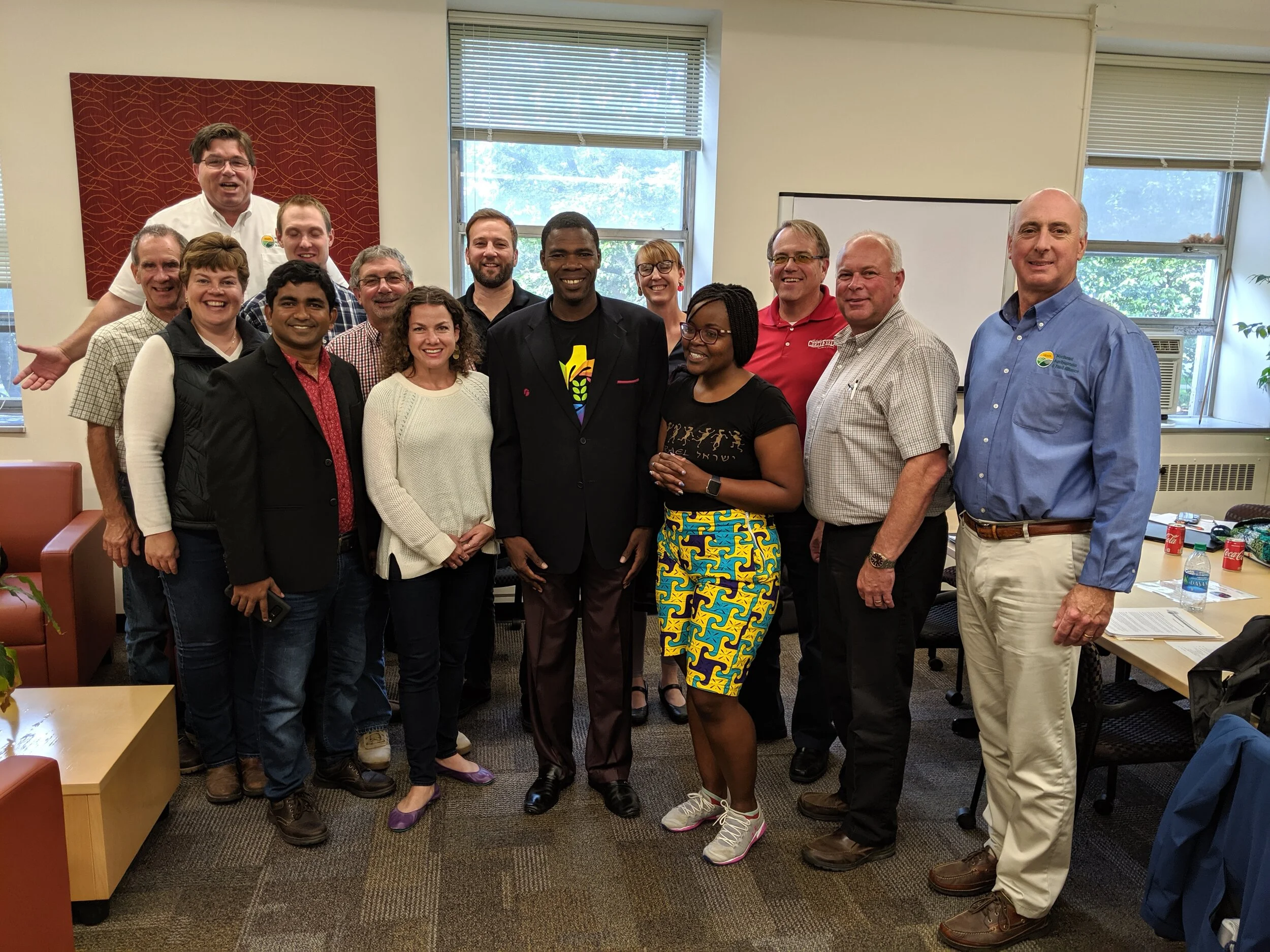
NEAFA board members gather with Alliance for Science Global Leadership Fellows following the September 26th board meeting where the fellows presented their stories on the importance of sound science in policy decisions driving their country’s ability to feed their citizens.

The meeting focused on committee updates, approval of legislative priorities, and reports from Cornell faculty members. College of Agriculture and Life Sciences Associate Dean Beth Ahner kicked off the presentations with an update and outlook of the College’s plans for the department of animal science. Dr. Tom Overton, the newly appointed chair of the department, joined the conversation, expressing his optimism towards addressing several ongoing challenges, including reestablishing the Animal Science Advisory Committee. The NEAFA Board pledged their ongoing support to work with Cornell to assure that their animal science program remains one of the best in the world. 

Newly hired faculty members, Joe McFadden and Kristan Reed, both NEAFA Partner Sesquicentennial Fellows, briefed the board on their current research projects.  “Both of these new faculty members hit the ground running when they arrived at Cornell,” stated John Clark, NEAFA President.  “NEAFA’s successful campaign to raise $1 million to seed these two faculty positions is paying off in spades as Reed and McFadden complement the Animal Science Department, and their work is on point to addressing dairy cattle nutrition issues.” Reed is also serving on the NEAFA Board of Directors. 

Naboho David an Alliance for Science Global Leadership Fellow from Burkina Faso in west Africa, speaks to board members about his desire to collaborate with US farmers on animal breeding and feeding strategies.

Naboho David an Alliance for Science Global Leadership Fellow from Burkina Faso in west Africa, speaks to board members about his desire to collaborate with US farmers on animal breeding and feeding strategies.

Another topic during the meeting was the Global Leadership Fellow (GLF) program from Cornell’s Alliance for Science. Three current fellows briefed the NEAFA board on their background and purpose for becoming a GLF. Cornell’s Alliance for Science is a group focused on growing the role of sound, peer reviewed science in public policy discussions and consumer based decisions throughout the world. The GLF program is a 12-week intensive training course held on the Cornell University campus. It is designed to equip and empower emerging international leaders who are committed to advocating for science-based communications and access to scientific innovation in their home countries. NEAFA’s Good Works Program is proud to help support the GLF program. 

NEAFA’s next board meeting is scheduled for December 9th, 2019, via webinar, and will focus on continuing the many programs advancing our mission objectives of advocacy, collaboration and education.  

Cornell Agricultural Workforce Development Council Hosts New York Labor Roadshow III, November 18-22, 2019

As a member of the Cornell Agricultural Workforce Development Council, the Northeast Agribusiness and Feed Alliance (NEAFA) urges our members to attend the upcoming New York Labor Roadshow III, so they can be aware of numerous and significant changes in store for their farmer customers.  The cost of the roadshow is $55 per person, payable at the door.

The roadshow will touch on a number of topics, including compliance with wage and hour laws and how to balance overtime and Day-of-Rest requirements. Also covered will be insurance updates for disability, paid family leave, and employment practices liability. Other topics include understanding unions and labor organizing, managing the collective bargaining process, the increasing importance of farm supervisors, preventing sexual harassment and the recent updates to the New York law, compliance priorities and enforcement plans for 2020, as well as the NYS Department of Labor Industry Quality Assurance Program Updates.

For more information or to sign up, click here.

Dates and Locations:

  • November 18. Genesee Community College-Batavia Campus, One College Road, Batavia, NY 14020-9704. Room T119 Lecture Hall, Conable Technology Building.

  • November 19. The Lodge at Hidden Valley Animal Adventure, 2887 Royce Rd, Varysburg, NY 14167.

  • November 20. Ramada by Wyndham, 21000 NY State Rt 3, Watertown, NY 13601

  • November 21. Hilton Garden Inn Clifton Park, 30 Clifton Country Road, Clifton Park, NY, 12065

  • November 22. Cayuga‐Onondaga BOCES, 1879 West Genesee Street Rd, Auburn, NY 13021. Conference Room 1, 2, 3.

NEAFA Member Highlight: Jenny Mills

unnamed.jpg

Northeast Agribusiness and Feed Alliance Board of Directors member Jenny Mills has been a part of the agricultural fabric of the Northeast since she was a child, growing up on a dairy farm in central New York. Mills currently works as the strategic marketing dairy industry lead for Provimi North America, the premix and nutrition business subsidiary of Cargill. Prior to that, Mills worked for Elanco Animal Health for fifteen years, straight from graduating from Cornell University with a masters in calf nutrition in 2004.

Mills’ love of agriculture comes from her desire to help feed the world. “Working to help improve dairy feeding practices and provide education to the agricultural industry in general is all about feeding the world,” said Mills. “There’s going to be about 2 billion more people by 2050, and we have to figure out how to feed them on the same resources we have today.”

At Provimi, Mills works with dairy innovations. “We work to see how do we bring these innovations to the market, make business plans, create sales, etc. to execute this,” said Mills. “We work to improve feed nutrition and create digital technology to allow nutritionists to increase efficiency and have access to the most current information possible.”

While at Elanco, Mills joined NEAFA in 2004, and became a board member approximately 10 years ago. “I really enjoy working with the people in agriculture and the feed industry, as well as serving the industry by helping to promote NEAFA’s core pillars,” said Mills. “Through advocacy, education and collaboration, I enjoy working across all parts of the industry to promote what NEAFA is all about.”

As a board member for NEAFA, Mills is the chair of the communications committee. “I enjoy getting to know all of the different members at NEAFA, learn about their businesses, and then representing them and working with NEAFA to advocate to the state legislature on agriculture’s behalf. Working on the communications committee, I feel that we’ve really brought the brand forward by working on social media, our newsletter, and getting information on the industry out to non-members. There’s always room to improve and continuing to promote our key issues throughout the northeast and beyond.”

Mills still lives in central N.Y with her husband, who is also in the dairy industry. They have two children, Lily and Logan, and both are involved with 4H as well as the Junior Holstein Association. Lily was also the bronze medalist in the juvenile girls figure skating category at the US Figure skating championships this year. Her brother Logan enjoys playing basketball and trainining in taekwondo. “We try to make sure they have a good dose of both agriculture and non-agricultural activities growing up.”

Feed Ingredient Trading Corporation Founder Rich Casler Announces Retirement

FITCCasler.jpg

Rich Casler, Chairman of the Feed Ingredient Trading Corporation’s (FITC) Board of Directors, has announced his retirement from the company that he co-founded with Tom O’Connell 31.5 years ago. Casler has handed the reins of the business to Greg McCulloch, the new majority shareholder as well as a long-time employee and part owner of FITC over the years. 

After 43 years in the agriculture and feed industry, Casler is looking forward to spending more time with his family and to travel more. “I will have nothing but fond memories of all these years,” said Casler. “The industry attracts honest, hardworking people, and I have been privileged to know an awful lot of them.  I will miss dealing with each of you given the relationship we have built over the years.”

Casler is a charter member and long-time leader of the Northeast Agribusiness and Feed Alliance where he served as secretary, executive committee member and bylaws expert. Rich was honored with NEAFA’s Distinguished Service Award in 2017.

Casler will remain involved with FITC going forward, as he was elected to the board of directors by the new shareholders as the new chairman. “My role here will be to provide insight and perspective to the new owners from an “old geezer’s” point of view,” said Casler. “To see if anything I have learned over these years might be useful to the new team here at FITC for the next 15 months.” 

NEAFA Announces New Affiliate Membership Program

The Northeast Agribusiness and Feed Alliance (NEAFA) Membership Committee and Board of Directors recently added a new category of membership focused on academic and agricultural extension personnel. Members are encouraged to share this new opportunity with those they know that could benefit from being a NEAFA member.

“The new membership category has numerous benefits for academics, cooperative extension professionals and other agricultural supporters”, stated Membership Committee Chair Corwin Holtz “The membership committee wanted to provide a lower priced membership option for those professionals who work tirelessly to support the agriculture industry through their research, education and outreach efforts. NEAFA values the expertise of our academic and extension colleagues and we want give these industry leaders the opportunity to be part of our organization and participate on our committees.”

This membership category does not provide for annual meeting voting rights, but NEAFA welcomes affiliate members to become active committee members, support sponsored programs, and be part of the overall support for the agribusiness community. Affiliate members will also receive the NEAFA newsletter, which keeps members up to date on programs, activities, and agricultural issues that NEAFA is addressing on a regional and national basis.

To join the Northeast Agribusiness and Feed Alliance, please click here.

If you have any questions, please feel free to reach out directly to Membership Committee Chair Corwin Holtz at holtz296@outlook.com, or to NEAFA Executive Director Rick Zimmerman at rzimmerman@zga-llc.com.

John’s Jottings: Threats? Opportunities? Friends? A Look at the Current Climate in Agriculture

by John Clark, NEAFA President

I must admit, that like for many others recently, life has come at me full tilt the past few weeks. Our upcoming Board Meeting, several active committee meetings, and the work that “pays the bills” has taken my focus off of contemplating an appropriate article for this month’s newsletter.

It’s a struggle not focusing on the negatives that we face currently as an industry. The continued business threats that exist for myself, customers, friends, and the associates that I have the distinct privilege of working with. Labor issues, trade wars, low commodity prices, droughts, floods, regulations, and the continued loss of honest hard-working dairy farm families that were excellent stewards of the land for generations. It can all be hard to take in. And yet we must come to peace with these obstacles, look for the positives in life and move forward from there.

There are plenty of positives in life, and support from new and old friends alike helps us move past the negatives that we all must continue to face. For me, our new intern Marie has been a small blessing. Working for us part time while still milking cows at home, she brings youth, enthusiasm, and a different view point on dairy to my world. It’s the proverbial breath of fresh air. Old friends help lift my spirits as well, people that I’ve counted on for years to share my thoughts, concerns, and joys in life with. Rene sharing his work at the Dairy Farmers of America (DFA) and spending time sharing what DFA means to the producers and the whole community. Sharing that their goal is to provide a market for producer’s milk – it’s just beautiful in its simplicity. And new friends like NEAFA’s new member Michael Howlett, are a help as well. Despite Howlett’s frenetic travel schedule to DC and back, he found time to share his philosophy of, “we don’t make farmers be price takers. We operate this way – when a farmer calls we connect them with an end user.” Again, simplicity brings success. I encourage you to take the time to reach out to the friends and colleagues in your world. You’ll find a wealth of knowledge, and people generous enough with their time to share it.

If you’re struggling with connecting with friends and colleagues that understand the difficulties you’re facing, NEAFA provides a platform in numerous formats to help network with people and meet them. Help your friends and colleagues that can benefit from this by spreading the word about signing up to become a member. Corwin Holtz, the chair of our membership committee, is ready and waiting to help with that. Secondly, attend our Annual Meeting on February 4-5, 2020 in Albany, NY at the Albany Marriott Hotel. I enjoy the Annual Meeting precisely because of the people it brings together that we don’t get a chance to see on a daily basis. It is a great, relaxed place to recharge, to learn about the industry, to gather trends and yes, make new friends and catch up with old ones. If you’ve never been or if you’ve been to every one of the NEAFA’s past 15 meetings, you can benefit. Stay tuned for details.

Dealing with the changes in the markets, the friends above have helped me navigate it. They share their knowledge and expertise. Listening to Rene, I learned what a tremendous reach DFA has, and how its members have great tools to work with. While they see strength in the market, they also see continued consolidation. For the commodity complex that Michael deals with, he sees strength in the market price. More importantly he sees the best farm managers preparing for the long term. He sees that long term producers will work hard to have margins and not eat into their equity.

To our members, thank you for being friends, for your hard work, and your continued involvement with the issues that our industry faces. Hopefully we will see you at the Cornell Nutrition Conference, our Annual Meeting, or sometime in between.

John’s Jottings over and out.